English
 Español
 tiếng việt
 русский
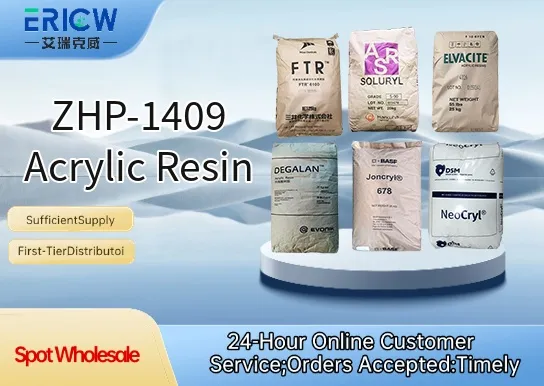
High solids content for reduced VOC emissions and improved coating efficiency.
Excellent UV resistance and long-term color retention in outdoor applications.
Superior compatibility with common crosslinkers including melamine and polyisocyanates.
Good flow and leveling characteristics for smooth, defect-free film formation.
Stable viscosity profile over extended storage periods at ambient temperature.
Automotive OEM and refinish topcoats.
Industrial maintenance coatings for metal substrates.
Architectural high-performance exterior wall paints.
Plastic coatings requiring adhesion and flexibility.
UV-curable hybrid systems as a reactive acrylic binder.
| Chemical Type | Thermosetting acrylic copolymer |
| Product Form | Liquid resin solution |
| Appearance | Clear to slightly hazy, water-white liquid |
| Solids Content (wt%) | 55 ± 2% |
| Viscosity (mPa·s, 25°C, Brookfield LVT, Spindle #3, 60 rpm) | 800–1,200 |
| Acid Value (mg KOH/g) | 12–16 |
| Density (g/cm³, 25°C) | 0.94–0.97 |
| Recommended Diluent | Aromatic hydrocarbons or ester-based solvents |
Q1: What is the primary function of ZHP-1409 in coating formulations?
A: ZHP-1409 is a reactive acrylic resin designed to enhance film hardness, gloss retention, and chemical resistance in solvent-borne and high-solids thermosetting coatings. It functions as a co-resin or crosslinking modifier, improving mechanical performance without significantly increasing viscosity.
Q2: Is ZHP-1409 compatible with common amino crosslinkers such as melamine-formaldehyde resins?
A: Yes, ZHP-1409 exhibits good compatibility and reactivity with standard alkylated melamine and benzoguanamine crosslinkers under conventional baking conditions. Its acrylic backbone contains hydroxyl and carboxyl functionality, enabling efficient co-curing in thermoset systems.
Q3: How should ZHP-1409 be stored to maintain stability?
A: Store in tightly sealed original containers in a cool, dry, and well-ventilated area away from direct sunlight and strong oxidizing agents. Under these conditions, shelf life is typically 12 months from date of manufacture. Avoid prolonged exposure to elevated temperatures or moisture.
Q4: Can ZHP-1409 be used in low-VOC or high-solids coating systems?
A: Yes, ZHP-1409 is formulated for use in medium-to-high solids applications and can contribute to VOC reduction when replacing higher-solids traditional acrylics or alkyds. Its molecular design supports viscosity control and film formation at reduced solvent levels.
Q5: What safety considerations apply during handling and processing?
A: As with most organic resins, appropriate personal protective equipment—including nitrile gloves, safety goggles, and adequate ventilation—should be used during handling. Avoid inhalation of mists or vapors and skin contact. Refer to the Safety Data Sheet (SDS) for detailed hazard information and first-aid measures.
Contact With Us:
E-mail: wangxingqiang@ericwchem.com
Have a Questions? Call Us:
Add:
Building A1, Jiete Industrial Park, Huangpu District, Guangzhou City, Guangdong Province, China