English
 Español
 tiếng việt
 русский
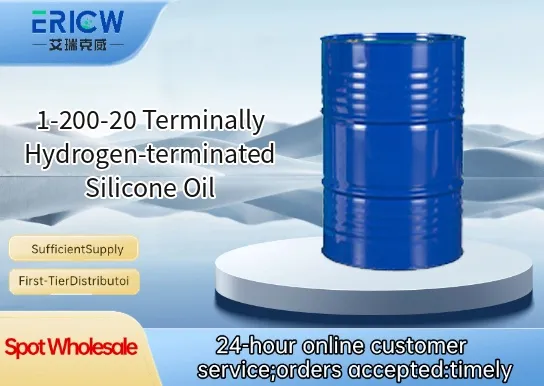
Highly reactive Si–H end groups enable efficient hydrosilylation with alkenes, alkynes, and functional silanes.
Controlled molecular weight distribution ensures consistent reactivity and predictable crosslinking behavior.
Low volatility and excellent thermal stability support high-temperature processing without premature degradation.
Hydrogen termination provides superior compatibility with platinum-catalyzed silicone systems and specialty polymers.
Non-ionic, solvent-free liquid form facilitates easy handling, metering, and integration into formulation processes.
Base polymer in addition-cure liquid silicone rubber (LSR) for medical devices and precision elastomers.
Crosslinker and functional modifier in silicone pressure-sensitive adhesives (PSAs) for high-performance tapes.
Reactive diluent and chain extender in silicone resins for heat-resistant coatings and encapsulants.
Building block for synthesizing silicone surfactants, coupling agents, and hybrid organic-inorganic materials.
Key ingredient in platinum-catalyzed release coatings for paper, film, and composite manufacturing.
| Chemical Type | Linear polydimethylsiloxane (PDMS) with terminal Si–H groups |
| Product Form | Clear, colorless to pale yellow liquid |
| Appearance | Homogeneous, low-viscosity fluid, no phase separation or sediment |
| Si–H Content (wt%) | 0.12–0.18% |
| Viscosity (cSt, 25°C) | 180–220 |
| Density (g/cm³, 25°C) | 0.96–0.98 |
| Refractive Index (25°C) | 1.400–1.405 |
| Flash Point (°C, closed cup) | ≥300 |
Q1: What is the primary functional role of 1-200-20 in silicone-based formulations?
A: 1-200-20 serves as a reactive silicone modifier, enabling covalent incorporation into crosslinking networks via hydrosilylation reactions. Its terminal Si–H groups allow it to function as a chain extender, crosslinker, or surface-functionalizing agent—enhancing thermal stability, release performance, or interfacial compatibility depending on the system.
Q2: How does 1-200-20 differ from standard dimethyl silicone oils?
A: Unlike non-reactive linear polydimethylsiloxanes, 1-200-20 features hydrogen atoms directly bonded to silicon at both molecular termini. This imparts chemical reactivity—particularly toward vinyl- or alkenyl-functional siloxanes—making it suitable for curable systems rather than inert lubricants or carriers.
Q3: Is 1-200-20 compatible with platinum-catalyzed silicone curing systems?
A: Yes—1-200-20 is fully compatible with platinum-based hydrosilylation catalysts and is commonly used in addition-cure RTV, LSR, and HTV silicone formulations. Careful control of inhibitor levels and mixing homogeneity is recommended to ensure consistent reactivity and avoid premature inhibition.
Q4: What handling precautions are advised due to its hydrogen-terminated nature?
A: While not pyrophoric, 1-200-20 should be stored under dry, inert conditions (e.g., nitrogen blanket) to minimize moisture exposure and potential Si–H hydrolysis. It is also advisable to avoid prolonged contact with strong bases or heavy-metal compounds that may promote unintended dehydrogenation or condensation side reactions.
Contact With Us:
E-mail: wangxingqiang@ericwchem.com
Have a Questions? Call Us:
Add:
Building A1, Jiete Industrial Park, Huangpu District, Guangzhou City, Guangdong Province, China