English
 Español
 tiếng việt
 русский
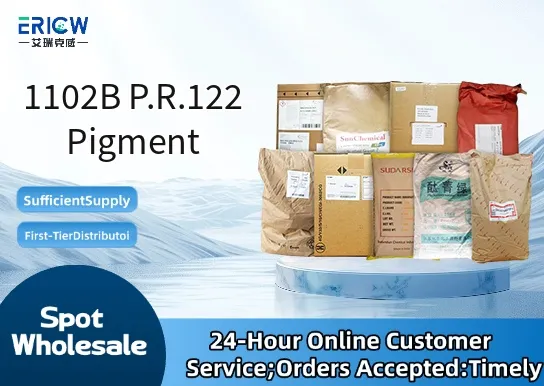
High chroma and excellent color strength in both aqueous and solvent-based systems.
Outstanding thermal stability up to 280°C, suitable for high-temperature processing.
Good lightfastness (ASTM D4303 Level 7–8) and weather resistance in outdoor applications.
Low volatility and negligible migration in polymer matrices, ensuring long-term color integrity.
Optimized particle size distribution for enhanced dispersion and gloss retention in coatings.
Automotive OEM and refinish coatings.
Engineering plastics including polyolefins, ABS, and polycarbonate.
Industrial coil coatings and metal decorating inks.
High-performance architectural and façade paints.
Packaging inks for flexible films and rigid containers.
| Chemical Type | Organic Pigment (Pigment Red 122) |
| Product Form | Fine free-flowing powder |
| Appearance | Red-violet crystalline powder |
| Primary Applications | Coatings, plastics, inks |
| Key Features | High tinctorial strength, low dusting, excellent dispersibility |
| Benefits | Consistent batch-to-batch performance, reduced formulation complexity |
| Heat Stability | Up to 280°C (short-term) |
| pH Range (Aqueous Slurry) | 5.5–7.5 |
Q1: What is the primary chemical class and typical application focus of 1102B P.R.122 Pigment?
A: 1102B P.R.122 is a high-performance azo pigment classified under Pigment Red 122, known for strong red shade, excellent heat stability, and good lightfastness. It is primarily used in demanding polymer applications such as engineering plastics, masterbatches, and high-temperature processing environments where color consistency and thermal resistance are critical.
Q2: Is 1102B P.R.122 suitable for food-contact or pharmaceutical-grade applications?
A: 1102B P.R.122 is not pre-certified for direct food-contact or pharmaceutical use. Its suitability depends on final formulation compliance, regulatory review by the end-user, and adherence to applicable regional requirements. Customers must conduct full regulatory assessment—including extractables and migration evaluation—before use in sensitive applications.
Q3: How does 1102B P.R.122 perform under high-shear and high-temperature processing conditions?
A: This pigment demonstrates robust dispersibility and thermal stability, making it well-suited for extrusion, injection molding, and other high-temperature polymer processing methods. It maintains color strength and shows minimal degradation or hue shift when processed at temperatures commonly encountered in polyolefin, polyester, and polycarbonate systems.
Q4: What dispersion recommendations are provided for optimal performance in polymer systems?
A: For best results, 1102B P.R.122 should be pre-dispersed using high-shear compounding equipment. Compatibility with common carrier resins (e.g., LDPE, EVA, or PET-based carriers) is generally favorable. Dosage typically ranges from 0.1% to 2% by weight depending on the required color strength and substrate opacity, and should be optimized through lab-scale trials.
Contact With Us:
E-mail: wangxingqiang@ericwchem.com
Have a Questions? Call Us:
Add:
Building A1, Jiete Industrial Park, Huangpu District, Guangzhou City, Guangdong Province, China