English
 Español
 tiếng việt
 русский
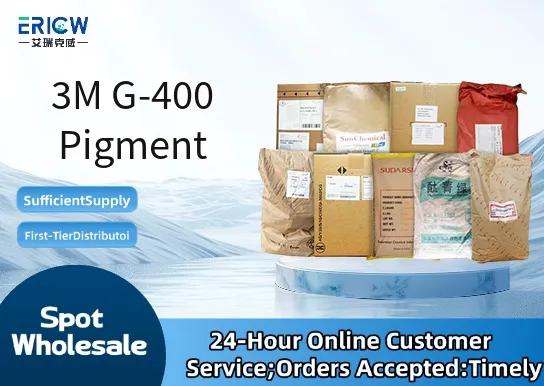
High chromatic strength with excellent color consistency across batches.
Thermally stable up to 220°C, suitable for high-temperature processing.
Low volatility and minimal outgassing in vacuum environments.
Compatible with a broad range of polymer matrices including polyolefins, ABS, and engineering thermoplastics.
Non-hazardous formulation compliant with REACH and RoHS directives.
Coloration of automotive interior trim components.
Pigmentation of medical device housings requiring biocompatibility support.
Functional coloring of industrial-grade connectors and enclosures.
UV-stable tinting for outdoor signage and architectural plastic profiles.
Electrostatic discharge (ESD)-safe colorant for electronics packaging materials.
| Chemical Type | Organic pigment dispersion (non-metallic) |
| Product Form | Free-flowing powder |
| Appearance | Uniform granular powder, dark gray to black depending on concentration |
| Primary Applications | Polymer coloring, functional additives for ESD/EMI shielding composites |
| Key Features | Thermal stability, low extractables, high dispersibility |
| Benefits | Reduced processing defects, consistent hue retention, compatibility with masterbatch systems |
| Regulatory Compliance | REACH SVHC-free, RoHS 2015/863/EU compliant, FDA non-contact food packaging eligible |
Q1: What is the primary function of 3M G-400 Pigment in polymer systems?
A: 3M G-400 Pigment is a high-performance, thermally stable pigment designed to provide consistent coloration and enhanced opacity in demanding polymer applications, particularly where heat resistance and dispersion stability are critical.
Q2: Is 3M G-400 Pigment suitable for use in food-contact plastics?
A: 3M G-400 Pigment is not pre-certified for food-contact applications. Its suitability depends on final formulation, processing conditions, and compliance verification against applicable regional regulatory requirements—users must conduct full regulatory due diligence prior to use in such applications.
Q3: How should 3M G-400 Pigment be dispersed in thermoplastics?
A: Optimal dispersion is achieved using standard compounding equipment such as twin-screw extruders, with attention to melt temperature profile and residence time. Pre-blending with carrier resin or masterbatching is recommended to ensure uniform distribution and minimize agglomeration.
Q4: Does 3M G-400 Pigment exhibit good UV stability?
A: Yes—3M G-400 Pigment is engineered for excellent lightfastness and weatherability, making it well-suited for outdoor applications where long-term color retention under UV exposure is required.
Q5: What types of polymers is 3M G-400 Pigment commonly used with?
A: It demonstrates broad compatibility with engineering thermoplastics including polypropylene (PP), polyethylene (PE), polyamide (PA), and polycarbonate (PC), and is frequently selected for high-temperature processing grades.
Contact With Us:
E-mail: wangxingqiang@ericwchem.com
Have a Questions? Call Us:
Add:
Building A1, Jiete Industrial Park, Huangpu District, Guangzhou City, Guangdong Province, China