English
 Español
 tiếng việt
 русский
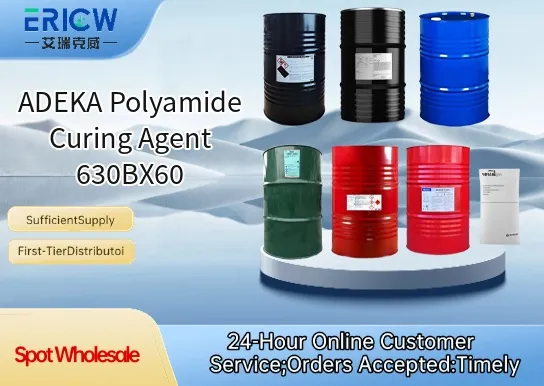
Low-viscosity liquid polyamide offering excellent compatibility with epoxy resins.
Provides balanced pot life and rapid ambient-temperature cure kinetics.
Delivers superior flexibility and impact resistance in cured epoxy systems.
Exhibits low exotherm during curing, reducing thermal stress in thick-section applications.
Complies with RoHS Directive and meets stringent regulatory requirements for industrial coatings.
Industrial maintenance coatings for steel structures and pipelines.
Electrical insulation systems in transformers and encapsulated components.
Adhesives for metal-to-metal and composite bonding in transportation equipment.
Repair mortars and grouts requiring ambient-cure performance and chemical resistance.
| Chemical Type | Polyamide adduct |
| Product Form | Liquid |
| Appearance | Amber to light brown transparent liquid |
| Amine Value (mg KOH/g) | 350–410 |
| Viscosity at 25°C (mPa·s) | 800–1,500 |
| Specific Gravity (25°C) | 0.95–1.02 |
| Flash Point (PMCC, °C) | ≥120 |
| Storage Stability | Stable for ≥12 months at 5–30°C in sealed containers |
Q1: What is the primary function of ADEKA Polyamide Curing Agent 630BX60 in epoxy systems?
A: It serves as a low-viscosity, aliphatic polyamide-based curing agent designed to provide balanced pot life, good flexibility, and enhanced chemical resistance in ambient- or moderate-temperature-cured epoxy coatings, adhesives, and sealants.
Q2: Is 630BX60 suitable for food-contact or potable water applications?
A: While 630BX60 is formulated for high-purity performance, its suitability for food-contact or potable water use depends on final formulation compliance and regulatory approval by relevant authorities—users must conduct full system-level testing and verification per applicable regional requirements.
Q3: How does 630BX60 compare to conventional polyamide curing agents in terms of handling and compatibility?
A: 630BX60 offers improved storage stability and reduced tendency toward bloom or surface haze compared to many standard polyamides, and it demonstrates broad compatibility with common liquid epoxy resins—including DGEBA types—without requiring pre-heating or extensive mixing aids.
Q4: What are typical processing conditions when using 630BX60?
A: It is generally processed at ambient temperature with adequate mechanical mixing; post-cure is optional but may improve crosslink density and long-term durability in demanding service environments.
Q5: Does 630BX60 require special safety or handling precautions beyond standard epoxy curing agents?
A: As with all amine-based curing agents, appropriate personal protective equipment—including gloves, eye protection, and ventilation—should be used during handling; skin contact should be avoided due to potential sensitization, and material safety data should be reviewed prior to use.
Contact With Us:
E-mail: wangxingqiang@ericwchem.com
Have a Questions? Call Us:
Add:
Building A1, Jiete Industrial Park, Huangpu District, Guangzhou City, Guangdong Province, China