English
 Español
 tiếng việt
 русский
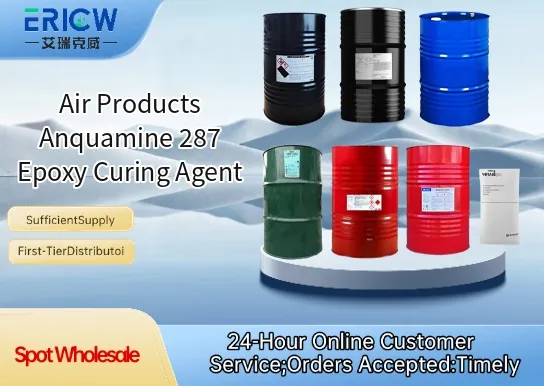
Fast-curing aliphatic amine adduct offering excellent pot life control at ambient temperatures.
Low volatility and reduced odor compared to conventional amine curing agents, improving workplace safety and handling.
Provides outstanding adhesion to metals, concrete, and composites without aggressive surface preparation.
Delivers high gloss, low-haze cured films with excellent chemical resistance and UV stability.
Compatible with standard DGEBA and modified epoxy resins for versatile formulating flexibility.
Industrial flooring and concrete coatings requiring rapid return-to-service.
Protective coatings for marine and offshore infrastructure.
Electrical encapsulants and insulating varnishes for transformers and motors.
Adhesives and structural bonding systems in transportation manufacturing.
High-performance composite matrix resins for wind blade and aerospace tooling.
| Chemical Type | Aliphatic amine adduct |
| Product Form | Liquid |
| Appearance | Clear, pale yellow liquid |
| Primary Applications | Coatings, adhesives, composites, electrical encapsulation |
| Key Features | Ambient-cure capability, low volatility, excellent film formation |
| Benefits | Reduced VOC emissions, improved worker safety, fast throughput |
| Storage Stability | 12 months unopened at 15–25°C |
| Reactivity Profile | Medium reactivity; typical gel time ~60–90 min at 25°C (with standard epoxy resin) |
Q1: What is the primary chemical class of Anquamine 287?
A: Anquamine 287 is an aliphatic polyamine-based epoxy curing agent, designed to provide rapid ambient-cure performance with low volatility and reduced irritation potential compared to conventional amines.
Q2: Is Anquamine 287 suitable for use in high-humidity or damp-surface applications?
A: Yes — Anquamine 287 exhibits good moisture tolerance and can cure effectively on slightly damp or high-humidity substrates, making it well-suited for field-applied industrial coatings and concrete repair systems where environmental control is limited.
Q3: How does Anquamine 287 compare to traditional DETA or TETA in terms of handling safety?
A: Anquamine 287 offers improved handling characteristics, including lower vapor pressure and reduced skin sensitization potential, supporting safer workplace handling without compromising reactivity or final film properties.
Q4: Can Anquamine 287 be used in formulations requiring FDA-compliant food-contact coatings?
A: Anquamine 287 is not pre-approved for direct food-contact applications; its suitability for such uses depends on full formulation evaluation and compliance verification by the end-user under applicable regulatory frameworks.
Q5: What types of epoxy resins is Anquamine 287 typically paired with?
A: It is commonly used with standard liquid bisphenol-A and bisphenol-F epoxy resins, as well as modified novolac epoxies, particularly in high-performance protective coatings, flooring, and adhesive systems requiring fast turnaround and ambient cure.
Contact With Us:
E-mail: wangxingqiang@ericwchem.com
Have a Questions? Call Us:
Add:
Building A1, Jiete Industrial Park, Huangpu District, Guangzhou City, Guangdong Province, China