English
 Español
 tiếng việt
 русский
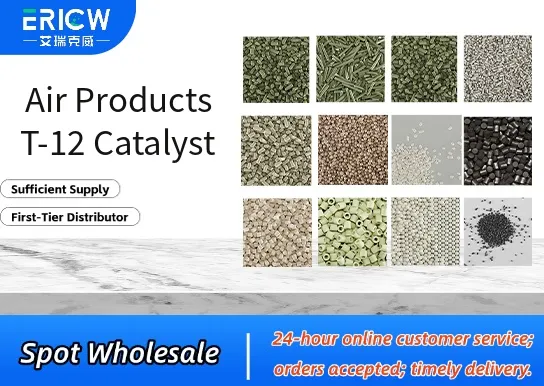
Highly selective tin-based catalyst optimized for polyurethane flexible foam production.
Enables precise control of cream-to-gel timing, improving cell structure uniformity and dimensional stability.
Low volatility formulation minimizes operator exposure and reduces VOC emissions during processing.
Compatible with standard polyol and isocyanate systems without requiring process modifications.
Stable performance across a broad temperature range (15–35°C), supporting consistent batch-to-batch quality.
Flexible slabstock polyurethane foam for bedding and furniture manufacturing.
Automotive seating foams requiring high resilience and low compression set.
Carpet underlay and packaging cushioning materials.
Industrial gasket and sealing compound formulations.
Water-blown or low-VOC foam systems compliant with regional environmental regulations.
| Chemical Type | Organotin compound (dibutyltin dilaurate derivative) |
| Product Form | Liquid |
| Appearance | Clear, pale yellow liquid |
| Density (25°C) | 1.02–1.05 g/cm³ |
| Flash Point (COC) | ≥ 160°C |
| Solubility | Completely miscible with common polyols and solvents |
| Storage Stability | ≥ 24 months at 15–25°C in sealed containers |
| Primary Applications | Polyurethane flexible foam catalysis (gelling reaction) |
Q1: What is the primary function of Air Products T-12 Catalyst in polyurethane systems?
A: T-12 is a tin-based catalyst designed to promote the urethane reaction (isocyanate–polyol coupling), enabling efficient gelation and network formation in flexible and rigid foams, coatings, adhesives, and elastomers.
Q2: How does T-12 compare to other tin catalysts like dibutyltin dilaurate (DBTDL)?
A: T-12 offers comparable catalytic activity to DBTDL but with improved handling characteristics, including enhanced thermal stability and reduced volatility, which supports consistent performance during processing and storage.
Q3: Is T-12 suitable for moisture-cure or one-component polyurethane formulations?
A: Yes — T-12 is widely used in one-component moisture-curing systems where controlled reactivity and shelf-life stability are critical; its formulation supports reliable cure profiles without premature gelation.
Q4: What are typical handling and storage recommendations for T-12?
A: Store in tightly sealed containers under dry, cool conditions away from moisture, strong oxidizers, and direct sunlight. Avoid prolonged exposure to ambient humidity to maintain catalytic integrity and shelf life.
Q5: How should T-12 be incorporated into polyurethane formulations?
A: T-12 is typically added to the polyol component under gentle agitation at room temperature; dosage depends on formulation requirements but generally ranges from 0.1% to 2% by weight relative to the polyol phase.
Contact With Us:
E-mail: wangxingqiang@ericwchem.com
Have a Questions? Call Us:
Add:
Building A1, Jiete Industrial Park, Huangpu District, Guangzhou City, Guangdong Province, China