English
 Español
 tiếng việt
 русский
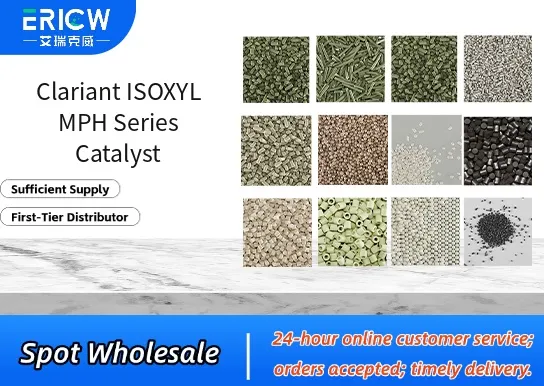
Highly selective for methylcyclohexane (MCH) dehydrogenation to toluene and hydrogen.
Thermally stable under continuous endothermic reforming conditions up to 520 °C.
Low coking tendency, enabling extended cycle lengths and reduced regeneration frequency.
Optimized metal dispersion and support acidity for balanced activity and stability.
Available in tailored pellet geometries for uniform pressure drop and efficient reactor packing.
Hydrogen production via catalytic dehydrogenation of methylcyclohexane in closed-loop H₂ carriers.
On-site hydrogen generation for electronics-grade cleaning and annealing processes.
Chemical intermediate synthesis in fine chemical and pharmaceutical manufacturing.
Renewable fuel upgrading in decentralized bio-refineries using cyclic hydrocarbon carriers.
Hydrogen storage and release systems for fuel cell backup power applications.
| Chemical Type | Pt–Sn on alumina–silica bifunctional support |
| Product Form | Cylindrical extrudates (1.6–2.0 mm diameter) |
| Appearance | Gray to dark gray free-flowing granules |
| Primary Applications | Methylcyclohexane (MCH) dehydrogenation |
| Key Features | High selectivity, low sintering, regenerable |
| Benefits | Improved H₂ yield, longer catalyst life, reduced operational downtime |
| Storage Conditions | Dry, inert atmosphere; avoid moisture and reducing agents |
| Handling Precautions | Use in well-ventilated area; avoid inhalation of dust |
Q1: What is the primary function of the ISOXYL MPH Series in polyurethane systems?
A: The ISOXYL MPH Series is a highly selective amine-based catalyst designed to promote the urethane reaction (isocyanate–polyol coupling) while minimizing side reactions such as trimerization or urea formation—enabling precise control over gel time, foam rise profile, and final cell structure in flexible and semi-rigid PU foams.
Q2: How does ISOXYL MPH differ from traditional tertiary amine catalysts like DABCO® 33-LV?
A: Unlike conventional cyclic or aliphatic tertiary amines, ISOXYL MPH catalysts feature a tailored molecular architecture that delivers enhanced hydrolytic stability, reduced volatility, and improved compatibility with sensitive raw materials—resulting in more consistent processing behavior and lower odor potential in finished foam products.
Q3: Is ISOXYL MPH suitable for low-emission or automotive-grade foam applications?
A: Yes—ISOXYL MPH catalysts are formulated to support low-VOC and low-odor foam manufacturing, making them well-suited for interior automotive components and other demanding applications where stringent emissions requirements apply. Performance should be validated within the full system formulation and curing conditions.
Q4: What is the typical dosage range for ISOXYL MPH in foam formulations?
A: Dosage is formulation-dependent but generally ranges from 0.1% to 2% by weight relative to polyol, with optimal levels determined through lab-scale optimization to balance reactivity, flow, and physical properties.
Contact With Us:
E-mail: wangxingqiang@ericwchem.com
Have a Questions? Call Us:
Add:
Building A1, Jiete Industrial Park, Huangpu District, Guangzhou City, Guangdong Province, China