English
 Español
 tiếng việt
 русский
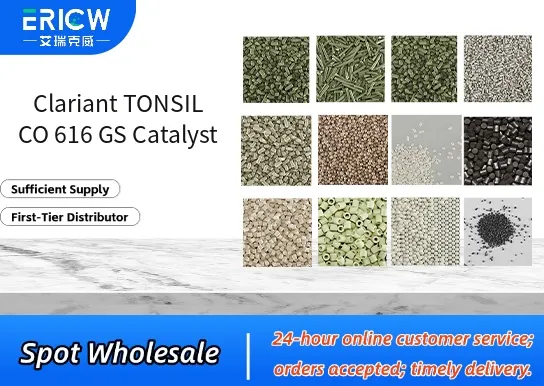
Highly selective acid catalyst for condensation and esterification reactions.
Thermally stable solid with low dust generation, enhancing operator safety and process reliability.
Non-corrosive to standard stainless-steel equipment, reducing maintenance requirements.
Easy to separate from reaction mixtures via filtration due to granular morphology.
Free of heavy metals and halogens, supporting green chemistry and regulatory compliance.
Production of plasticizers (e.g., dioctyl phthalate, DIDP) via esterification.
Synthesis of lubricant additives including alkyl succinimides and ester-based anti-wear agents.
Manufacture of fragrance esters and flavor compounds in fine chemical synthesis.
Catalysis of polyester prepolymer formation in specialty polymer applications.
Dehydration reactions in pharmaceutical intermediate synthesis.
| Chemical Type | Solid acid catalyst (sulfonated carbon-based) |
| Product Form | Granules |
| Appearance | Black, free-flowing granules |
| Primary Applications | Esterification, condensation, dehydration |
| Key Features | Non-corrosive, thermally stable, filterable |
| Benefits | Reduced equipment corrosion, simplified downstream separation, lower waste disposal cost |
| Storage Conditions | Store in dry, well-ventilated area; protect from moisture |
| Regulatory Status | REACH registered; compliant with EU food-contact regulations (EU 10/2011) when used as processing aid |
Q1: What is the primary function of TONSIL CO 616 GS in polymer processing?
A: TONSIL CO 616 GS is a high-activity, silica-based catalyst designed to promote efficient condensation reactions—particularly in silicone and hybrid polymer systems—enhancing crosslinking kinetics and improving final network formation without excessive heat sensitivity.
Q2: Is TONSIL CO 616 GS suitable for food-contact or medical-grade applications?
A: While TONSIL CO 616 GS is formulated for technical performance in industrial polymer systems, its suitability for regulated end uses—including food contact or medical devices—depends on full formulation compliance, regulatory evaluation, and end-product testing. Clariant recommends consulting with regulatory experts and conducting application-specific validation.
Q3: How should TONSIL CO 616 GS be incorporated into a polymer system?
A: It is typically added during the mixing stage under controlled conditions—preferably at ambient to moderately elevated temperatures—and dispersed uniformly using standard high-shear equipment. Pre-dispersion in a compatible carrier liquid may improve homogeneity, especially in viscous formulations.
Q4: Does TONSIL CO 616 GS require special storage or handling precautions?
A: Yes—it should be stored in a cool, dry place under inert atmosphere or sealed packaging to prevent moisture uptake, which may affect catalytic activity. Standard industrial hygiene practices apply: avoid inhalation of dust and direct skin contact; use appropriate PPE during handling.
Contact With Us:
E-mail: wangxingqiang@ericwchem.com
Have a Questions? Call Us:
Add:
Building A1, Jiete Industrial Park, Huangpu District, Guangzhou City, Guangdong Province, China