English
 Español
 tiếng việt
 русский
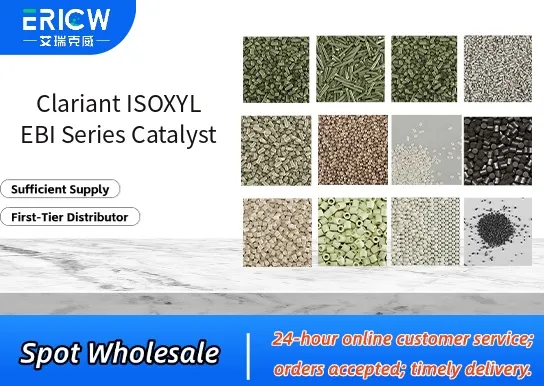
Highly selective for ethylene oxide (EO) production via silver-catalyzed oxidation of ethylene.
Enhanced long-term stability under industrial fixed-bed reactor conditions.
Optimized alkali promoter system to suppress total combustion and improve EO yield.
Controlled particle size distribution ensuring uniform pressure drop and heat transfer.
Consistent performance across multiple regeneration cycles without significant activity loss.
Ethylene oxide manufacturing in large-scale petrochemical plants.
Integrated EO/EG (ethylene glycol) production facilities requiring high catalyst reliability.
Greenfield projects where startup efficiency and early-life selectivity are critical.
Revamp campaigns targeting increased plant capacity and reduced energy consumption.
| Chemical Type | Silver-based heterogeneous catalyst with alkali and alkaline earth promoters |
| Product Form | Fixed-bed granular catalyst pellets |
| Appearance | Grayish-white, cylindrical pellets (5–6 mm diameter × 5–10 mm length) |
| Primary Applications | Ethylene oxidation to ethylene oxide |
| Key Features | High selectivity, thermal stability, low dust generation |
| Benefits | Improved EO yield, extended cycle length, reduced CO₂ footprint per ton EO |
| Storage Conditions | Store in dry, well-ventilated area; avoid exposure to moisture and reducing agents |
Q1: What is the primary function of the ISOXYL EBI Series catalyst in polymer processing?
A: The ISOXYL EBI Series is a highly efficient epoxy-based catalyst designed to promote crosslinking and cure reactions—particularly in thermosetting resins, coatings, and adhesives—enabling faster gel times, improved network formation, and enhanced thermal and mechanical performance.
Q2: Is the ISOXYL EBI Series compatible with common epoxy resin systems?
A: Yes, it demonstrates broad compatibility with standard bisphenol-A and bisphenol-F epoxies, as well as novolac-type resins. Compatibility with specialty or modified epoxies should be verified through small-scale formulation testing under intended process conditions.
Q3: How should the catalyst be incorporated into a formulation?
A: It is typically added during the late-stage mixing phase under controlled temperature and moisture-free conditions to ensure uniform dispersion and avoid premature reactivity. Pre-dilution in a compatible solvent or resin portion may be recommended for optimal handling and distribution.
Q4: What storage conditions are recommended to maintain catalyst stability?
A: Store in original sealed containers at temperatures between 5 °C and 25 °C, protected from moisture, direct sunlight, and strong oxidizing agents. Prolonged exposure to elevated temperatures or humidity may reduce catalytic activity over time.
Contact With Us:
E-mail: wangxingqiang@ericwchem.com
Have a Questions? Call Us:
Add:
Building A1, Jiete Industrial Park, Huangpu District, Guangzhou City, Guangdong Province, China