English
 Español
 tiếng việt
 русский
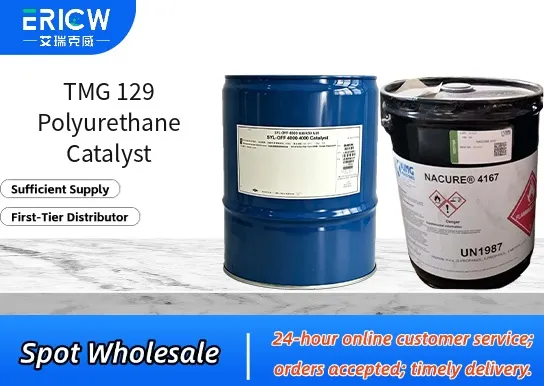
Highly selective tertiary amine catalyst optimized for balanced reactivity in polyurethane foam systems.
Low volatility and minimal odor, supporting improved workplace safety and reduced VOC emissions.
Excellent compatibility with common polyols, isocyanates, and auxiliary additives in flexible and semi-rigid formulations.
Enables precise control over cream time and rise profile without compromising final foam density or cell structure.
Stable under standard storage conditions with extended shelf life when kept sealed and dry.
Flexible slabstock polyurethane foams for bedding and furniture manufacturing.
Semi-rigid automotive seating and interior trim foams.
Integral skin foams used in steering wheels, armrests, and dash components.
Water-blown low-emission foam systems compliant with indoor air quality standards.
Two-component spray-applied polyurethane insulation foams.
| Chemical Type | Tertiary amine catalyst |
| Product Form | Liquid |
| Appearance | Clear, pale yellow liquid |
| Density (25°C) | 0.92–0.94 g/cm³ |
| Refractive Index (25°C) | 1.460–1.470 |
| pH (10% aqueous solution) | 10.8–11.2 |
| Primary Applications | Flexible & semi-rigid PU foam catalysis |
| Key Features | Balanced gelling/foaming activity, low volatility, low odor |
Q1: What is the primary function of TMG 129 in polyurethane systems?
A: TMG 129 is a tertiary amine-based catalyst designed to promote the urethane reaction (isocyanate–polyol coupling), offering balanced reactivity and improved flow characteristics—particularly beneficial in flexible slabstock and molded foam applications.
Q2: Is TMG 129 compatible with water-blown and MDI-based formulations?
A: Yes, TMG 129 demonstrates good compatibility across a range of polyurethane systems, including water-blown flexible foams and MDI-prepolymer blends. It supports consistent cell structure development without excessive sensitivity to moisture or formulation variations.
Q3: How does TMG 129 compare to traditional amine catalysts like DABCO 33LV in terms of odor and volatility?
A: TMG 129 exhibits lower volatility and reduced amine odor compared to many low-molecular-weight aliphatic amines, contributing to improved workplace handling and lower post-cure emissions in finished foam products.
Q4: Can TMG 129 be used in combination with other catalysts?
A: Yes, TMG 129 is commonly used in synergistic blends with gelling catalysts (e.g., certain imidazoles or metal carboxylates) or blowing catalysts to fine-tune cream time, rise profile, and final cure—dosage depends on formulation requirements and desired processing window.
Q5: What are the recommended storage conditions for TMG 129?
A: Store TMG 129 in its original sealed container at temperatures between 5 °C and 30 °C, protected from direct sunlight and moisture. Prolonged exposure to high humidity or elevated temperatures may affect catalytic performance over time.
Contact With Us:
E-mail: wangxingqiang@ericwchem.com
Have a Questions? Call Us:
Add:
Building A1, Jiete Industrial Park, Huangpu District, Guangzhou City, Guangdong Province, China