English
 Español
 tiếng việt
 русский
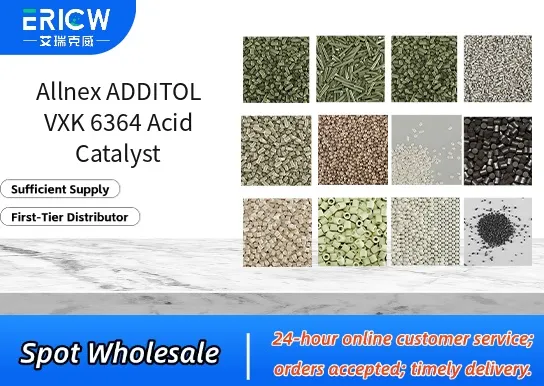
Highly efficient low-temperature curing catalyst for amino–formaldehyde crosslinking systems.
Excellent hydrolytic stability, minimizing premature gelation in aqueous or high-humidity formulations.
Low volatility and reduced odor profile compared to traditional strong acid catalysts.
Enables precise cure control with minimal impact on final film flexibility and gloss retention.
Compatible with a broad range of resins including alkyds, acrylics, and polyester-based coatings.
Automotive OEM and refinish clearcoats requiring fast, low-bake cure performance.
Industrial coil coatings where rapid line speed and consistent crosslink density are critical.
General-purpose can and container coatings demanding excellent storage stability and film integrity.
Wood coatings for furniture and flooring, balancing reactivity with pot life and surface aesthetics.
Architectural and protective maintenance coatings formulated for ambient-to-moderate bake conditions.
| Chemical Type | Sulfonic acid derivative (non-volatile, organic acid catalyst) |
| Product Form | Liquid |
| Appearance | Pale yellow to light amber, clear liquid |
| Primary Applications | Amino-resin crosslinking in thermosetting coatings |
| Key Features | Low-temperature cure activation, hydrolytic stability, resin compatibility |
| Benefits | Improved process efficiency, extended pot life, reduced VOC contribution vs. p-TSA |
| Storage Stability | ≥12 months at 20–25°C in sealed original container |
| Recommended Use Level | 0.2–1.5 wt% (based on total resin solids) |
Q1: What is the primary function of ADDITOL VXK 6364 in coating formulations?
A: ADDITOL VXK 6364 is a liquid acid catalyst designed to accelerate crosslinking reactions—particularly between melamine formaldehyde resins and hydroxyl-functional binders—in thermosetting coatings. It enhances cure speed and improves through-cure at lower baking temperatures.
Q2: Is ADDITOL VXK 6364 compatible with waterborne systems?
A: Yes, ADDITOL VXK 6364 exhibits good compatibility with many waterborne acrylic and polyester dispersions, as well as hybrid solvent–water systems. Its low volatility and hydrolytic stability support use in formulations where pH control and shelf-life are critical.
Q3: How should ADDITOL VXK 6364 be incorporated into a formulation?
A: It is typically added during the let-down stage under mild agitation. Pre-dilution with a compatible solvent or binder may be used to ensure uniform dispersion. Avoid high-shear mixing or prolonged exposure to elevated temperatures prior to curing.
Q4: Does ADDITOL VXK 6364 affect film appearance or storage stability?
A: When used within recommended dosage ranges, it generally does not impair gloss, clarity, or viscosity stability. However, overdosing may lead to premature gelation or reduced pot life—formulators are advised to evaluate compatibility and stability under actual processing conditions.
Contact With Us:
E-mail: wangxingqiang@ericwchem.com
Have a Questions? Call Us:
Add:
Building A1, Jiete Industrial Park, Huangpu District, Guangzhou City, Guangdong Province, China