English
 Español
 tiếng việt
 русский
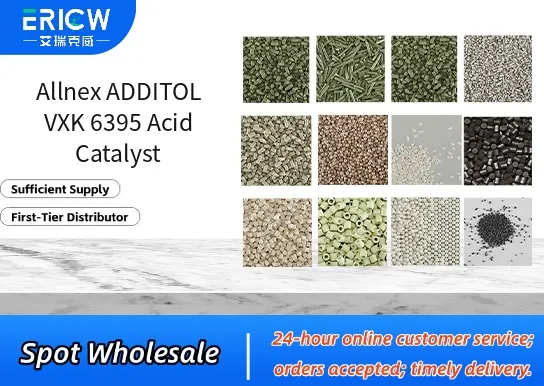
Highly effective low-temperature curing catalyst for alkyd, polyester, and acrylic resin systems.
Non-volatile, solvent-free liquid formulation ensuring reduced VOC emissions and improved workplace safety.
Excellent storage stability with minimal risk of premature gelation or viscosity increase.
Compatible with a broad range of crosslinkers including melamine formaldehyde and blocked isocyanates.
Enables rapid through-cure without surface defects such as wrinkling or blooming.
Industrial coil coatings requiring fast line speeds and low-bake performance.
Automotive OEM and refinish topcoats where consistent film hardness and gloss retention are critical.
General-purpose can and container coatings demanding high chemical resistance and flexibility.
Wood furniture and panel coatings requiring balanced cure profile and low yellowing tendency.
Appliance coatings requiring excellent mar resistance and substrate adhesion on metal substrates.
| Chemical Type | Sulfonic acid derivative (non-metallic) |
| Product Form | Clear, viscous liquid |
| Appearance | Colorless to pale yellow liquid |
| Primary Applications | Low-bake thermosetting coatings (alkyd, polyester, acrylic) |
| Key Features | Low-temperature cure activation, non-corrosive, halogen-free |
| Benefits | Reduced energy consumption, improved pot life control, enhanced film integrity |
| Storage Stability | ≥12 months at 20–25°C in original sealed container |
| Compatibility | Compatible with most common coating resins and crosslinkers; pre-testing recommended |
Q1: What is the primary function of ADDITOL VXK 6395 in coating formulations?
A: ADDITOL VXK 6395 is a liquid acid catalyst designed to accelerate thermosetting reactions—particularly in melamine-formaldehyde and urea-formaldehyde crosslinking systems—enabling faster cure at lower temperatures and improved through-cure in thick or pigmented films.
Q2: How does VXK 6395 compare to traditional p-toluenesulfonic acid (pTSA) catalysts?
A: Unlike solid pTSA, VXK 6395 is a fully liquid, non-volatile, and hydrolytically stable catalyst with excellent solubility in common organic solvents and resin systems. It offers more consistent dispersion, reduced volatility-related handling concerns, and improved shelf-life stability in formulated coatings.
Q3: Is ADDITOL VXK 6395 suitable for use in low-VOC or high-solids coating systems?
A: Yes—its low volatility and compatibility with high-solids resins make it well-suited for low-VOC formulations. It does not contribute significantly to VOC content and remains effective without requiring high-temperature flash-off steps.
Q4: What are typical handling and storage recommendations?
A: Store in tightly sealed original containers at ambient temperature, away from moisture and strong oxidizing agents. The product is hygroscopic and should be protected from prolonged exposure to humid air to maintain catalytic activity and solution clarity.
Q5: Can VXK 6395 be used in combination with other catalysts or co-catalysts?
A: Yes—it is commonly used alongside latent catalysts or buffering agents to fine-tune cure profile and pot life. Compatibility testing is recommended when combining with strong bases or highly reactive co-catalysts to avoid premature neutralization or gelation.
Contact With Us:
E-mail: wangxingqiang@ericwchem.com
Have a Questions? Call Us:
Add:
Building A1, Jiete Industrial Park, Huangpu District, Guangzhou City, Guangdong Province, China