English
 Español
 tiếng việt
 русский
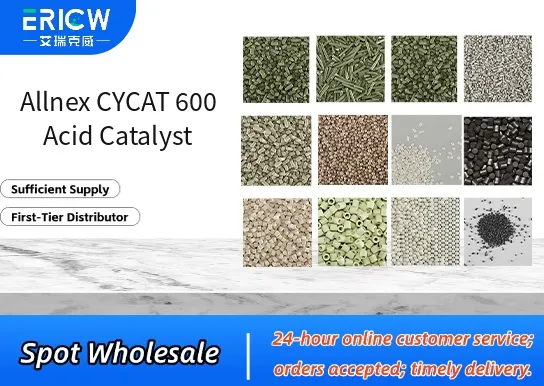
Highly effective para-toluenesulfonic acid (p-TSA) derivative with controlled reactivity for precise cure kinetics.
Low volatility and reduced odor compared to conventional strong acid catalysts, improving workplace safety and handling.
Excellent solubility in common organic solvents and compatibility with alkyd, polyester, and acrylic resin systems.
Enables low-temperature curing without compromising film hardness or chemical resistance.
Non-hygroscopic formulation ensures consistent performance and shelf stability under ambient storage conditions.
Automotive refinish coatings requiring fast, low-bake cure profiles.
Industrial maintenance coatings for metal substrates exposed to harsh environments.
General-purpose coil coatings where balanced pot life and through-cure are critical.
Wood coatings demanding low yellowing and high gloss retention after curing.
Can coatings for food-contact and beverage applications compliant with FDA-relevant regulatory frameworks.
| Chemical Type | Para-toluenesulfonic acid derivative |
| Product Form | Powder |
| Appearance | White to off-white crystalline solid |
| pH (1% aqueous solution) | Approx. 1.5–2.0 |
| Solubility | Freely soluble in ethanol, acetone, xylene, and ethyl acetate |
| Recommended Use Level | 0.1–0.5 wt% on total formulation solids |
| Storage Conditions | Keep in original sealed container at 15–25°C, protect from moisture |
| Key Features | Controlled acidity, low volatility, non-hygroscopic, solvent-compatible |
Q1: What is the primary function of CYCAT 600 in coating formulations?
A: CYCAT 600 is a strong acid catalyst designed to accelerate thermosetting reactions—particularly melamine-formaldehyde and urea-formaldehyde crosslinking—in ambient- or low-bake industrial coatings, inks, and adhesives.
Q2: How does CYCAT 600 differ from conventional p-toluenesulfonic acid (pTSA) catalysts?
A: CYCAT 600 offers improved hydrolytic stability and reduced volatility compared to traditional aromatic sulfonic acids, supporting better shelf life in solventborne and high-solids systems while maintaining high catalytic efficiency at lower thermal input.
Q3: Is CYCAT 600 suitable for waterborne systems?
A: Yes—it is compatible with many waterborne acrylic and polyester dispersions, though optimal performance requires careful pH management and compatibility testing due to its acidic nature.
Q4: What safety precautions should be observed when handling CYCAT 600?
A: As a corrosive acidic material, it requires appropriate personal protective equipment (PPE), including chemical-resistant gloves and eye protection. Handling should occur in well-ventilated areas, and contact with skin, eyes, or mucous membranes must be avoided.
Q5: How is CYCAT 600 typically dosed in a formulation?
A: It is generally used at low concentrations—typically ranging from 0.1% to 2.0% by weight relative to total resin solids—depending on cure schedule, film thickness, and desired pot life; dosage should always be optimized through lab-scale trials.
Contact With Us:
E-mail: wangxingqiang@ericwchem.com
Have a Questions? Call Us:
Add:
Building A1, Jiete Industrial Park, Huangpu District, Guangzhou City, Guangdong Province, China