English
 Español
 tiếng việt
 русский
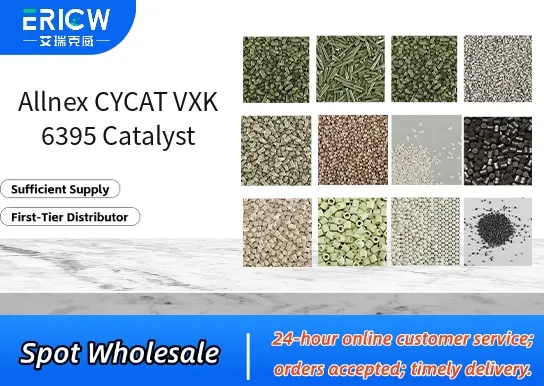
Highly efficient low-temperature curing catalyst for amino-crosslinked systems.
Excellent storage stability in solventborne and high-solids coatings formulations.
Provides balanced reactivity—fast cure onset without premature gelation during processing.
Low volatility and reduced odor profile compared to traditional p-toluenesulfonic acid (p-TSA) derivatives.
Compatible with melamine, urea, and benzoguanamine resins across a broad pH range.
Automotive OEM and refinish basecoat/clearcoat systems.
Industrial maintenance coatings for metal substrates.
Appliance and coil coating formulations requiring rapid through-cure.
High-performance wood finishes demanding low-bake efficiency and film integrity.
General-purpose baking enamels for metal packaging and signage.
| Chemical Type | Sulfonic acid derivative (non-volatile, encapsulated) |
| Product Form | Liquid |
| Appearance | Clear, pale yellow to amber liquid |
| Primary Applications | Amino-crosslinked thermoset coatings |
| Key Features | Low-temperature cure activation, hydrolytic stability, resin compatibility |
| Benefits | Reduced energy consumption, improved pot life, enhanced film hardness development |
| Recommended Use Level | 0.3–1.2 wt% on total resin solids |
| Storage Conditions | Store in original container at 5–30 °C; protect from moisture |
Q1: What is the primary function of CYCAT VXK 6395 in coating formulations?
A: CYCAT VXK 6395 is a highly efficient acid catalyst designed to accelerate the crosslinking reaction between melamine-formaldehyde resins and hydroxyl-functional binders—particularly in high-performance thermosetting coatings for industrial and coil applications.
Q2: How does CYCAT VXK 6395 differ from conventional p-toluenesulfonic acid (pTSA) catalysts?
A: Unlike standard pTSA, CYCAT VXK 6395 offers improved latency at ambient temperatures combined with rapid activation upon thermal cure, enabling better pot life control and reduced risk of premature gelation during storage or application.
Q3: Is CYCAT VXK 6395 compatible with waterborne coating systems?
A: Yes—it demonstrates good compatibility with many water-reducible and hybrid solvent/waterborne systems based on acrylic or polyester polyols, though formulation stability should be verified under actual process conditions due to its acidic nature.
Q4: What is the typical dosage range for optimal performance?
A: Dosage depends on resin type, film thickness, and cure schedule, but it is typically used at low concentrations—generally ranging from 0.1% to 2% by weight relative to total non-volatile content—and often falls within the lower end of that range for fast-cure applications.
Q5: Does CYCAT VXK 6395 require special handling or storage conditions?
A: As an acidic solid, it should be stored in a cool, dry place away from moisture and strong bases. While not classified as highly hazardous under standard transport regulations, appropriate personal protective equipment (PPE) such as gloves and eye protection is recommended during handling to avoid skin or mucous membrane irritation.
Contact With Us:
E-mail: wangxingqiang@ericwchem.com
Have a Questions? Call Us:
Add:
Building A1, Jiete Industrial Park, Huangpu District, Guangzhou City, Guangdong Province, China