English
 Español
 tiếng việt
 русский
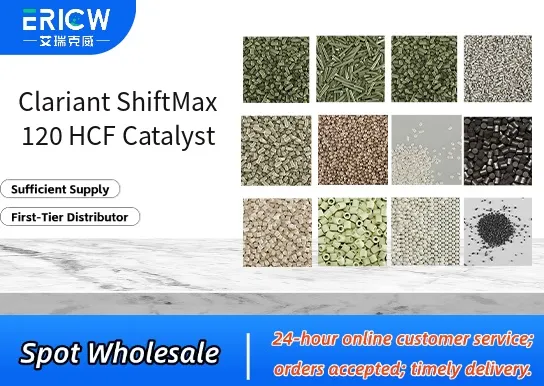
Highly selective low-temperature water-gas shift (WGS) catalyst optimized for hydrogen production with minimal CO slip.
Robust sulfur tolerance enabling stable operation in feedstocks containing trace H₂S.
Enhanced thermal and mechanical stability for extended service life under cyclic start-up/shut-down conditions.
Low-pressure-drop monolithic honeycomb form factor (HCF) designed for compact reactor integration.
Pre-sulfided formulation eliminating need for on-site sulfidation and reducing commissioning time.
Hydrogen production units in refineries and petrochemical plants.
On-purpose hydrogen generation for ammonia synthesis and fuel-grade hydrogen supply.
Carbon capture-ready syngas conditioning in blue hydrogen facilities.
Integrated gasification combined cycle (IGCC) and biomass-to-hydrogen processes.
Small- to medium-scale modular hydrogen plants requiring rapid deployment and footprint efficiency.
| Chemical Type | Copper–zinc–alumina–chromia-based low-temperature shift catalyst |
| Product Form | Honeycomb monolith (ceramic substrate with washcoat) |
| Appearance | Gray-black structured monolith, non-dusting |
| Primary Applications | Low-temperature water-gas shift reaction (200–280 °C) |
| Key Features | Pre-sulfided, sulfur-tolerant, low-pressure-drop design |
| Benefits | Reduced commissioning time, improved process reliability, lower operating costs |
| Storage Requirements | Store in dry, ventilated area; protect from moisture and direct contact with air |
| Handling Precautions | Avoid mechanical impact; use appropriate PPE during loading/unloading |
Q1: What is the primary function of ShiftMax 120 HCF in polyurethane foam production?
A: ShiftMax 120 HCF is a high-activity, low-fogging amine catalyst specifically designed to promote the urethane reaction (polyol–isocyanate coupling) while minimizing volatile emissions and surface defects in flexible slabstock and molded foams.
Q2: How does ShiftMax 120 HCF differ from conventional tertiary amine catalysts?
A: Unlike many traditional amine catalysts, ShiftMax 120 HCF features a tailored molecular structure that delivers balanced reactivity, reduced volatility, and improved compatibility with modern low-emission polyol systems—supporting compliance with evolving indoor air quality and workplace safety expectations.
Q3: Is ShiftMax 120 HCF suitable for water-blown or low-VOC foam formulations?
A: Yes—it is widely used in water-blown and low-VOC flexible polyurethane foam systems where low fogging, minimal odor, and consistent flow behavior are critical. Its formulation supports stable processing across a range of environmentally driven formulations.
Q4: What handling precautions should be observed during storage and dosing?
A: As with most amine catalysts, ShiftMax 120 HCF should be stored in tightly sealed containers under dry, cool conditions away from strong oxidizing agents. Standard industrial hygiene practices—including appropriate ventilation and personal protective equipment—are recommended during handling and metering.
Q5: How is dosage typically determined for optimal performance?
A: Dosage is formulation-dependent and generally ranges from 0.1% to 2% by weight relative to the polyol component. Optimal levels are determined through lab-scale trials considering reactivity balance, cream/gel times, and final foam properties—not by fixed ratios.
Contact With Us:
E-mail: wangxingqiang@ericwchem.com
Have a Questions? Call Us:
Add:
Building A1, Jiete Industrial Park, Huangpu District, Guangzhou City, Guangdong Province, China