English
 Español
 tiếng việt
 русский
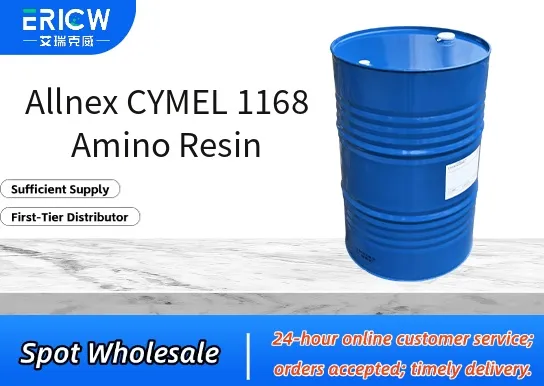
High reactivity with hydroxyl-functional resins, enabling fast cure at low to medium baking temperatures.
Excellent compatibility with acrylic, polyester, and alkyd resins in thermosetting coating systems.
Low formaldehyde emission profile, supporting compliance with stringent environmental and workplace safety standards.
Superior storage stability in solvent-based formulations without premature self-condensation.
Provides outstanding hardness, chemical resistance, and gloss retention in cured films.
Automotive OEM coatings for metal substrates.
Industrial maintenance coatings for appliances and machinery.
Coil coatings requiring high-speed curing on continuous lines.
Powder coating hybrids where enhanced flow and crosslink density are required.
General-purpose can and closure coatings for food and beverage packaging.
| Chemical Type | Methoxymethylated melamine-formaldehyde resin |
| Product Form | Clear liquid |
| Appearance | Colorless to pale yellow, transparent liquid |
| Non-Volatile Content (wt%) | 98.0 – 100.0 |
| Viscosity (mPa·s, 25°C) | 40 – 120 |
| Density (g/cm³, 25°C) | 1.22 – 1.26 |
| Solvent | n-Butanol |
| Key Features | Low-bake reactivity, low formaldehyde release, high compatibility |
Q1: What is the primary function of CYMEL 1168 in coating formulations?
A: CYMEL 1168 is a highly reactive melamine-formaldehyde crosslinker designed to enhance hardness, chemical resistance, and thermal stability in thermosetting coatings—particularly in high-performance industrial and coil coating systems.
Q2: Is CYMEL 1168 compatible with hydroxyl-functional acrylic or polyester resins?
A: Yes, CYMEL 1168 exhibits excellent compatibility and reactivity with standard hydroxyl-terminated acrylic, polyester, and alkyd resins, especially under conventional acid-catalyzed baking conditions (typically 140–180 °C).
Q3: How should CYMEL 1168 be stored to maintain optimal performance?
A: Store in tightly sealed original containers at temperatures between 5 °C and 30 °C, away from moisture, strong acids, and excessive heat. Prolonged exposure to humidity or low pH may accelerate self-condensation and reduce shelf life.
Q4: Does CYMEL 1168 require an external catalyst for curing?
A: Yes, effective crosslinking typically requires catalysis—commonly with weak organic acids (e.g., p-toluenesulfonic acid or blocked acid catalysts). Catalyst selection and dosage depend on cure schedule, film thickness, and desired pot life.
Contact With Us:
E-mail: wangxingqiang@ericwchem.com
Have a Questions? Call Us:
Add:
Building A1, Jiete Industrial Park, Huangpu District, Guangzhou City, Guangdong Province, China