English
 Español
 tiếng việt
 русский
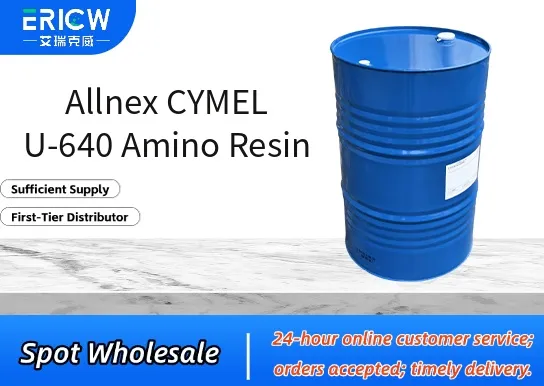
Highly reactive melamine-formaldehyde resin offering excellent cure speed at moderate baking temperatures.
Superior compatibility with polyester, acrylic, and alkyd resins in solventborne and high-solids coating systems.
Delivers outstanding hardness, chemical resistance, and gloss retention in thermoset coatings.
Low free formaldehyde content, supporting improved workplace safety and regulatory compliance.
Excellent flow and leveling characteristics for smooth, defect-free film formation.
Automotive OEM and refinish topcoats requiring high durability and aesthetic performance.
Industrial maintenance coatings for metal substrates exposed to harsh environments.
Appliance coatings demanding excellent mar resistance and long-term color stability.
General-purpose coil coatings where rapid line speed and consistent crosslink density are critical.
Can and closure coatings requiring strong adhesion, corrosion protection, and food-contact compliance (when formulated appropriately).
| Chemical Type | Melamine-formaldehyde amino resin |
| Product Form | Liquid, low-viscosity solution |
| Appearance | Clear, pale yellow liquid |
| Solvent Content | Approx. 70–75% (proprietary alcohol/butanol blend) |
| Non-Volatile Content | 25–28% w/w |
| Acid Number | 1–3 mg KOH/g |
| Free Formaldehyde | <0.3% w/w |
| Primary Applications | Crosslinker for thermosetting decorative and protective coatings on metal |
Q1: What is the primary function of CYMEL U-640 in coating formulations?
A: CYMEL U-640 functions as a highly reactive melamine-formaldehyde crosslinker, designed to enhance cure speed, hardness, chemical resistance, and gloss retention—particularly in low-bake and high-solids thermosetting coatings based on hydroxyl-functional resins.
Q2: Is CYMEL U-640 suitable for waterborne systems?
A: Yes, CYMEL U-640 is formulated for compatibility with both solventborne and waterborne hydroxyl-acrylic or polyester dispersions, offering good storage stability and efficient crosslinking under mild curing conditions.
Q3: How does CYMEL U-640 differ from conventional high-methylol melamines?
A: CYMEL U-640 features a balanced methylolation level and optimized etherification, delivering improved hydrolytic stability and reduced formaldehyde release during cure compared to traditional fully methylolated melamines—while maintaining excellent reactivity with polyols.
Q4: What are typical dosage guidelines for CYMEL U-640 in a standard baking enamel formulation?
A: Dosage depends on resin functionality, target performance, and cure schedule, but CYMEL U-640 is typically used at low concentrations—generally ranging from 0.1% to 2% by weight relative to total non-volatile content—with optimization recommended via lab-scale testing.
Contact With Us:
E-mail: wangxingqiang@ericwchem.com
Have a Questions? Call Us:
Add:
Building A1, Jiete Industrial Park, Huangpu District, Guangzhou City, Guangdong Province, China