English
 Español
 tiếng việt
 русский
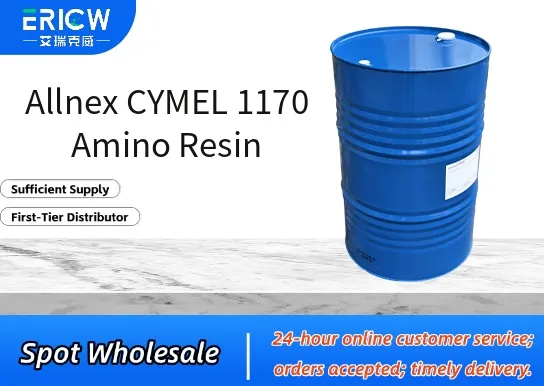
High reactivity with hydroxyl-functional resins, enabling fast cure at low to medium baking temperatures.
Excellent compatibility with acrylic, polyester, and alkyd resin systems.
Low formaldehyde emission profile, supporting compliance with stringent VOC and emissions regulations.
Superior gloss retention and hardness development in thermoset coatings.
Good storage stability when handled under recommended conditions (cool, dry, sealed).
Automotive OEM clearcoats and basecoats.
Industrial coil coatings for pre-painted metal substrates.
Appliance finishes requiring high durability and aesthetic performance.
General-purpose can and container coatings.
High-performance wood furniture and panel coatings.
| Chemical Type | Methylated melamine-formaldehyde resin |
| Product Form | Clear, low-viscosity liquid |
| Appearance | Water-white to pale yellow, transparent liquid |
| Non-Volatile Content (105°C, 60 min) | 80–84 wt% |
| Viscosity (25°C, Brookfield RV, spindle #3, 20 rpm) | 200–500 mPa·s |
| Density (25°C) | 1.21–1.24 g/cm³ |
| pH (10% solution in deionized water) | 7.5–9.0 |
| Solvent | Isobutanol / n-butanol blend |
Q1: What is the primary function of CYMEL 1170 in coating formulations?
A: CYMEL 1170 is a highly methylated melamine-formaldehyde resin used as a crosslinking agent for hydroxyl- and carboxyl-functional polymers, such as acrylics, polyesters, and alkyds. It enables thermoset formation upon baking, delivering excellent hardness, chemical resistance, and gloss retention.
Q2: How does CYMEL 1170 differ from other CYMEL resins like 303 or 323?
A: CYMEL 1170 features a higher degree of methylation and lower free formaldehyde content compared to standard melamine resins. This results in improved compatibility with acid-catalyzed systems, enhanced storage stability in solventborne formulations, and reduced volatility during cure—making it especially suitable for high-performance industrial and coil coatings.
Q3: Is CYMEL 1170 compatible with waterborne systems?
A: While CYMEL 1170 is primarily designed for solventborne applications, it can be incorporated into certain waterborne hybrid systems with careful formulation—typically using co-solvents and pH control. However, its hydrolytic stability in fully aqueous environments is limited; for robust waterborne compatibility, Allnex recommends evaluating alternative amino resins specifically engineered for such systems.
Q4: What catalysts are commonly used with CYMEL 1170, and how do they affect cure performance?
A: Acid catalysts—such as p-toluenesulfonic acid (p-TSA), dinonylnaphthalene disulfonic acid (DND-SA), or blocked acid types—are typically employed to accelerate the crosslinking reaction. Catalyst selection influences onset temperature, gel time, and final film properties; stronger acids enable lower-bake cures but may compromise pot life if not properly balanced.
Q5: How should CYMEL 1170 be stored to maintain optimal performance?
A: Store in tightly sealed containers at temperatures between 10 °C and 30 °C, away from direct sunlight and strong oxidizing agents. Prolonged exposure to freezing conditions or excessive heat may affect viscosity and reactivity. For best results, use within 12 months of receipt and avoid repeated freeze-thaw cycles.
Contact With Us:
E-mail: wangxingqiang@ericwchem.com
Have a Questions? Call Us:
Add:
Building A1, Jiete Industrial Park, Huangpu District, Guangzhou City, Guangdong Province, China