English
 Español
 tiếng việt
 русский
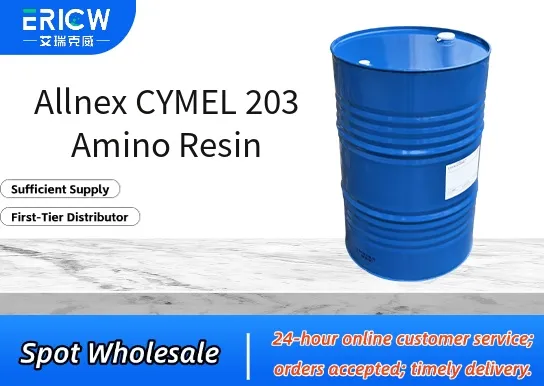
Highly reactive melamine-formaldehyde resin with excellent compatibility in solvent-based and high-solids coatings.
Provides outstanding hardness, chemical resistance, and thermal stability in cured film systems.
Low formaldehyde emission profile, supporting compliance with stringent environmental and safety regulations.
Enables rapid cure at moderate baking temperatures (120–150 °C), improving production efficiency.
Excellent gloss retention and color stability in decorative and protective topcoats.
Automotive OEM and refinish clearcoats and basecoats.
Industrial maintenance coatings for metal furniture and appliances.
Can and coil coatings requiring high durability and corrosion resistance.
General-purpose baking enamels for metal substrates.
Wood finishes requiring fast cure and superior scratch resistance.
| Chemical Type | Melamine-formaldehyde resin |
| Product Form | Liquid |
| Appearance | Clear, pale yellow to colorless liquid |
| Solvent | Butanol / isobutanol blend |
| Non-Volatile Content (wt%) | 80–84% |
| Viscosity (25 °C, mPa·s) | 100–250 |
| Acid Number (mg KOH/g) | < 1.0 |
| Density (20 °C, g/cm³) | 1.07–1.10 |
Q1: What is the primary function of CYMEL 203 in coating formulations?
A: CYMEL 203 functions as a highly reactive melamine-formaldehyde crosslinker, designed to enhance hardness, chemical resistance, and thermal stability when cured with hydroxyl- or carbamate-functional resins such as acrylics, alkyds, or polyesters.
Q2: Is CYMEL 203 suitable for low-bake or ambient-cure systems?
A: CYMEL 203 is optimized for thermal cure systems, typically requiring baking temperatures above 120 °C. It is not formulated for true ambient-cure applications; however, it may be used in moderate low-bake conditions when combined with appropriate acid catalysts and resin partners.
Q3: How does CYMEL 203 compare to other CYMEL resins in terms of reactivity and storage stability?
A: CYMEL 203 offers balanced reactivity—higher than standard hexamethoxymethylmelamine (HMMM) types but lower than highly methylolated variants—providing good pot life in solventborne systems while maintaining efficient cure response under typical industrial baking conditions.
Q4: Can CYMEL 203 be used in waterborne coatings?
A: While primarily developed for solventborne systems, CYMEL 203 can be incorporated into certain waterborne hybrid formulations—typically with careful pH control, co-solvent selection, and stabilization strategies—but requires formulation testing to ensure compatibility and hydrolytic stability.
Contact With Us:
E-mail: wangxingqiang@ericwchem.com
Have a Questions? Call Us:
Add:
Building A1, Jiete Industrial Park, Huangpu District, Guangzhou City, Guangdong Province, China