English
 Español
 tiếng việt
 русский
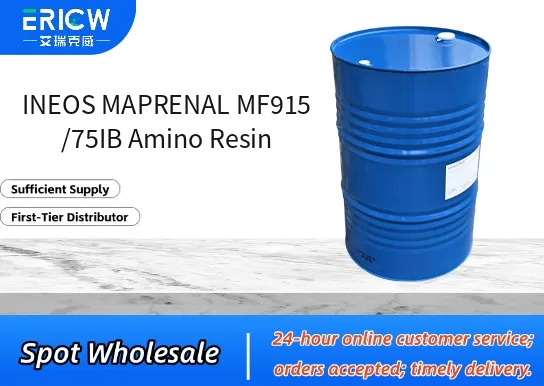
High reactivity with formaldehyde and melamine precursors for rapid cure kinetics in thermoset systems.
Excellent compatibility with alkyd, polyester, and acrylic resins to enable broad-formulation flexibility.
Low free formaldehyde content, supporting compliance with stringent industrial hygiene and emissions standards.
Consistent batch-to-batch performance ensured by INEOS’s controlled polymerization and purification processes.
Optimized methylol group distribution for balanced storage stability and crosslinking efficiency.
Automotive OEM and refinish coatings requiring high-gloss, chip-resistant topcoats.
Industrial coil coatings for pre-painted metal used in building façades and appliances.
Wood furniture and panel finishes demanding fast oven cure and superior hardness development.
Can coatings for food and beverage containers where FDA-compliant curing and low extractables are critical.
General-purpose decorative and protective baking enamels for metal substrates.
| Chemical Type | Methylolated melamine-formaldehyde resin |
| Product Form | Liquid (aqueous solution) |
| Appearance | Clear to slightly hazy, colourless to pale yellow liquid |
| Solids Content (wt%) | 70–74% |
| pH (10% aqueous solution) | 8.0–9.0 |
| Viscosity (25°C, mPa·s) | 150–350 |
| Free Formaldehyde (wt%) | ≤0.3% |
| Storage Stability | ≥6 months at 20–25°C in sealed container |
Q1: What is the primary function of MAPRENAL MF915/75IB in coating formulations?
A: MAPRENAL MF915/75IB is a methylated melamine-formaldehyde resin designed to act as a crosslinking agent for hydroxyl-functional resins—such as alkyds, acrylics, and polyesters—in thermosetting coatings. It enhances hardness, chemical resistance, and thermal stability upon cure.
Q2: Is MF915/75IB suitable for low-bake or ambient-cure systems?
A: This resin is formulated for medium-temperature curing, typically requiring bake conditions in the range of 120–160 °C. While it can be used with catalysis to extend reactivity, it is not optimized for true ambient-cure applications without strong acid catalysts or extended air-dry times.
Q3: How does MF915/75IB compare to other methylated melamine resins in terms of compatibility and storage stability?
A: MF915/75IB offers balanced solubility in common organic solvents (e.g., xylene, butanol, esters) and good compatibility with a wide range of binder systems. Its moderate degree of methylation provides enhanced shelf life compared to highly reactive variants, especially under controlled pH and moisture conditions.
Q4: What catalysts are commonly recommended for use with this resin?
A: Strong acid catalysts—such as p-toluenesulfonic acid (pTSA), dinonylnaphthalene disulfonic acid (DNDSDA), or blocked acid systems—are typically employed to promote efficient crosslinking at practical cure temperatures. Catalyst selection should consider pot life requirements and final film properties.
Q5: Can MF915/75IB be used in waterborne systems?
A: While primarily developed for solvent-borne applications, MF915/75IB may be incorporated into hybrid or co-solvent-based waterborne systems with careful formulation—especially when paired with surfactants or coalescing aids. However, full water dispersibility is not inherent, and compatibility testing is strongly advised.
Contact With Us:
E-mail: wangxingqiang@ericwchem.com
Have a Questions? Call Us:
Add:
Building A1, Jiete Industrial Park, Huangpu District, Guangzhou City, Guangdong Province, China