English
 Español
 tiếng việt
 русский
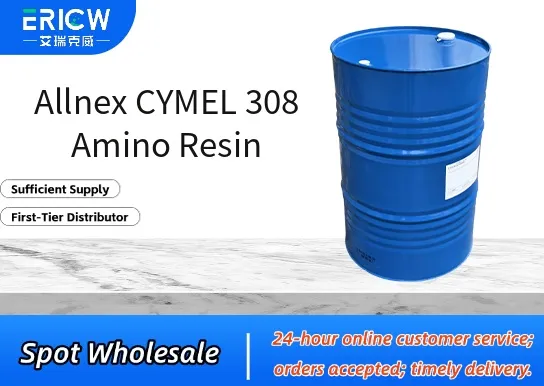
High reactivity with hydroxyl-functional resins, enabling efficient crosslinking at moderate cure temperatures.
Excellent compatibility with acrylic, polyester, and alkyd resin systems.
Low formaldehyde emission profile compared to conventional melamine-formaldehyde resins.
Good storage stability in solvent-based formulations when properly inhibited.
Delivers superior hardness, chemical resistance, and gloss retention in cured coatings.
Automotive OEM and refinish topcoats.
Industrial coil and can coatings.
General-purpose appliance and metal furniture finishes.
High-performance wood coatings for furniture and flooring.
Electrical insulation varnishes and impregnating resins.
| Chemical Type | Methylolated high-alkylated melamine-formaldehyde resin |
| Product Form | Liquid |
| Appearance | Clear, pale yellow to light amber liquid |
| Solvent Content | Approx. 70–75% (in n-butanol) |
| Non-Volatile Content | 25–28% (by weight, 1 hr @ 125°C) |
| Viscosity (25°C) | 100–250 mPa·s (Brookfield, spindle #2, 60 rpm) |
| pH (10% solution in water) | 7.5–8.5 |
| Key Features | Low-cure reactivity, low formaldehyde release, high compatibility |
Q1: What is the primary function of CYMEL 308 in coating formulations?
A: CYMEL 308 acts as a highly reactive crosslinker for hydroxyl- and amide-functional resins—such as acrylics, polyesters, and alkyds—enabling durable, thermoset coatings with improved hardness, chemical resistance, and cure efficiency at moderate baking temperatures.
Q2: Is CYMEL 308 suitable for low-bake or ambient-cure systems?
A: While CYMEL 308 is optimized for thermal cure (typically 120–160 °C), it can be formulated into low-bake systems with appropriate catalyst selection and resin compatibility; however, it is not designed for true ambient-cure applications without external activation.
Q3: How does CYMEL 308 compare to other melamine-formaldehyde resins in terms of volatility and storage stability?
A: CYMEL 308 is a partially methylated melamine resin with balanced reactivity and lower formaldehyde volatility compared to high-methylol types; it offers good shelf life when stored under recommended conditions (cool, dry, sealed), though long-term stability depends on formulation pH and presence of reactive co-resins.
Q4: Can CYMEL 308 be used in waterborne coating systems?
A: Yes—CYMEL 308 is compatible with many water-reducible and hybrid waterborne systems, particularly when stabilized with appropriate co-solvents and pH control; performance requires careful optimization of dispersion stability and cure kinetics to avoid premature reaction or haze formation.
Contact With Us:
E-mail: wangxingqiang@ericwchem.com
Have a Questions? Call Us:
Add:
Building A1, Jiete Industrial Park, Huangpu District, Guangzhou City, Guangdong Province, China