English
 Español
 tiếng việt
 русский
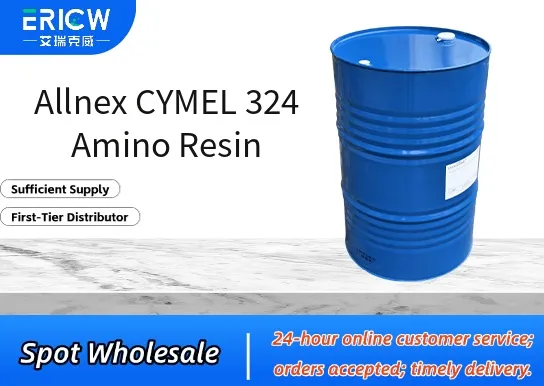
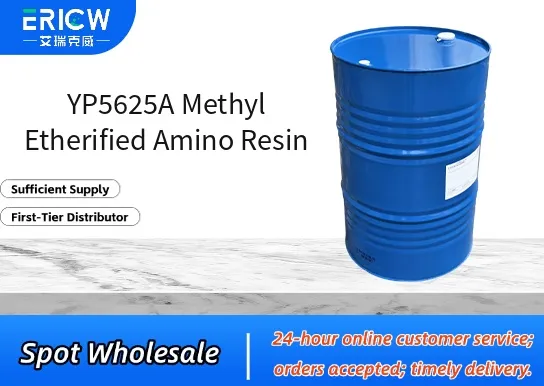
Highly reactive melamine-formaldehyde resin with excellent crosslinking efficiency at low curing temperatures.
Outstanding compatibility with acrylic, polyester, and alkyd resins in solvent-borne and high-solids coating systems.
Provides superior hardness, chemical resistance, and gloss retention in finished coatings.
Low formaldehyde content meets stringent regulatory requirements for industrial and decorative applications.
Excellent storage stability in acidic catalyzed formulations without premature gelation.
Automotive OEM and refinish topcoats requiring high durability and appearance.
Industrial maintenance coatings for metal substrates including appliances and furniture.
Can and coil coatings where rapid cure and corrosion resistance are critical.
General-purpose baking enamels for metal packaging and hardware finishes.
Electrodeposition (EDP) primer coaters seeking enhanced film integrity and edge coverage.
| Chemical Type | Melamine-formaldehyde crosslinker |
| Product Form | Liquid |
| Appearance | Clear to pale yellow, homogeneous liquid |
| Solvent Content | Approx. 70–75% (isobutanol/butanol blend) |
| Non-Volatile Content | 25–30% (by weight, 105°C, 30 min) |
| pH (10% solution in water) | 7.5–8.5 |
| Viscosity (25°C, Brookfield RV, spindle #3, 20 rpm) | 150–350 cP |
| Key Features | Low-cure reactivity, formaldehyde-reduced, acid-catalyzed crosslinker |
Q1: What is the primary function of CYMEL 324 in coating formulations?
A: CYMEL 324 acts as a highly reactive crosslinker for hydroxyl- and amide-functional resins—such as acrylics, polyesters, and alkyds—enabling durable, thermoset film formation upon curing. Its low formaldehyde content and balanced reactivity support efficient bake schedules without excessive volatility or premature gelation.
Q2: How does CYMEL 324 differ from other melamine-formaldehyde resins like CYMEL 303 or CYMEL 370?
A: CYMEL 324 features a partially alkylated structure with a tailored butanol/methanol ratio, offering intermediate reactivity and solubility compared to fully butylated (e.g., CYMEL 303) or highly methylated (e.g., CYMEL 370) variants. This makes it especially suitable for solventborne industrial coatings requiring good compatibility, storage stability, and controlled cure response.
Q3: Is CYMEL 324 compatible with acid-catalyzed systems, and what catalysts are typically recommended?
A: Yes—CYMEL 324 performs well in acid-catalyzed systems. Commonly used catalysts include p-toluenesulfonic acid (p-TSA), dinonylnaphthalene disulfonic acid (DNDSSA), and blocked or latent acid sources. Catalyst selection and dosage depend on desired pot life, cure temperature, and film properties; typical usage ranges from 0.1% to 2% by weight relative to the total resin solids.
Q4: Can CYMEL 324 be used in low-bake or ambient-cure applications?
A: While CYMEL 324 is optimized for thermal cure (typically 120–160 °C), it can be formulated for lower-temperature baking with strong acid catalysts or reactive co-crosslinkers. It is not designed for true ambient-cure systems without catalysis or hybrid chemistries, as its inherent reactivity requires activation energy to achieve full network development.
Contact With Us:
E-mail: wangxingqiang@ericwchem.com
Have a Questions? Call Us:
Add:
Building A1, Jiete Industrial Park, Huangpu District, Guangzhou City, Guangdong Province, China