English
 Español
 tiếng việt
 русский
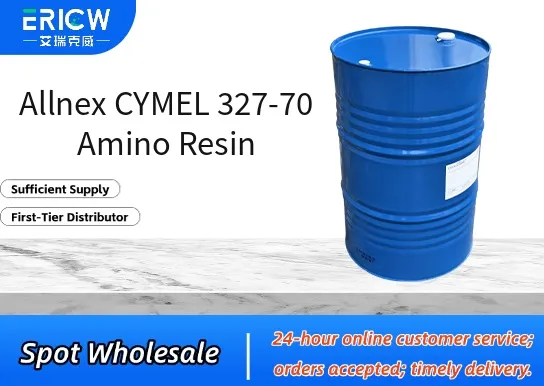
High reactivity with hydroxyl-functional resins, enabling fast cure at low to medium baking temperatures.
Excellent compatibility with acrylic, polyester, and alkyd resins in thermosetting coating systems.
Low formaldehyde emission profile, supporting compliance with stringent environmental and safety regulations.
Good storage stability in solvent-based formulations when properly inhibited and stored under recommended conditions.
Delivers superior hardness, chemical resistance, and gloss retention in cured film applications.
Automotive OEM clearcoats and basecoats requiring high durability and appearance performance.
Industrial coil coatings for metal substrates demanding rapid line speed and excellent corrosion resistance.
General-purpose can and container coatings where food-contact compliance and flexibility are essential.
Appliance finishes requiring mar resistance, detergent resistance, and consistent bake response.
High-performance wood furniture and panel coatings requiring low-cure energy and excellent flow.
| Chemical Type | Methylated melamine-formaldehyde resin |
| Product Form | Liquid |
| Appearance | Clear, colorless to pale yellow liquid |
| Solvent Content | Approx. 70% (in n-butanol) |
| Non-Volatile Content | 28–32% (by weight, ASTM D1259) |
| Viscosity (25°C) | 15–25 mPa·s (ASTM D4292) |
| Acid Number | < 1.0 mg KOH/g (ASTM D1639) |
| Storage Stability | ≥6 months at 25°C in sealed original container |
Q1: What is the primary function of CYMEL 327-70 in coating formulations?
A: CYMEL 327-70 is a highly reactive melamine-formaldehyde crosslinker designed to enhance hardness, chemical resistance, and thermal stability in thermosetting coatings—particularly in low-bake and ambient-cure systems based on hydroxyl-functional resins such as acrylics, polyesters, or alkyds.
Q2: How does CYMEL 327-70 differ from other melamine crosslinkers in terms of reactivity and cure profile?
A: CYMEL 327-70 features a high degree of methylation and low free formaldehyde content, resulting in improved storage stability and reduced volatility during processing. Its reactivity is balanced to support efficient curing at moderate temperatures (typically 120–160 °C), with good latency in one-component systems and compatibility with common acid catalysts.
Q3: Is CYMEL 327-70 suitable for waterborne coating systems?
A: Yes—it is formulated for compatibility with many water-reducible and waterborne resin systems, including hydroxy-acrylic dispersions and self-crosslinking latexes, though formulation optimization—including pH control, co-solvent selection, and catalyst dosage—is recommended to ensure colloidal stability and full cure development.
Q4: What are typical handling and storage recommendations for CYMEL 327-70?
A: Store in tightly sealed original containers in a cool, dry, well-ventilated area below 30 °C. Avoid prolonged exposure to moisture, strong acids, or elevated temperatures, which may accelerate self-condensation. For optimal shelf life, use within 12 months of manufacture when stored under recommended conditions.
Contact With Us:
E-mail: wangxingqiang@ericwchem.com
Have a Questions? Call Us:
Add:
Building A1, Jiete Industrial Park, Huangpu District, Guangzhou City, Guangdong Province, China