English
 Español
 tiếng việt
 русский
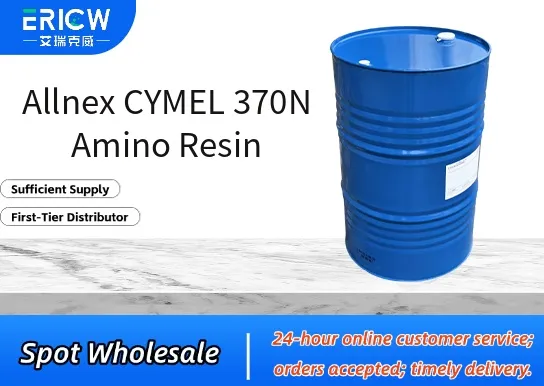
Highly reactive methylated melamine-formaldehyde resin with excellent cure speed at low to moderate baking temperatures.
Low free formaldehyde content, supporting improved workplace safety and regulatory compliance (e.g., REACH, TSCA).
Excellent compatibility with common acrylic, polyester, and alkyd resins used in industrial coatings.
Provides superior hardness, chemical resistance, and gloss retention in thermoset film formation.
Good storage stability in solvent-based systems when properly formulated and inhibited.
Automotive OEM and refinish topcoats requiring rapid throughput and high durability.
Appliance coatings for refrigerators, washing machines, and ovens where heat resistance and aesthetics are critical.
Metal packaging coatings for food and beverage cans, offering FDA-compliant performance with proper formulation.
General industrial maintenance coatings for metal furniture, HVAC components, and agricultural equipment.
Coil coatings for pre-painted steel and aluminum substrates in construction and roofing applications.
| Chemical Type | Methylated melamine-formaldehyde resin |
| Product Form | Liquid, solvent-based (typically xylene/n-butanol blend) |
| Appearance | Clear, pale yellow to light amber liquid |
| Non-Volatile Content (105°C, 30 min) | 80.0 – 84.0 wt% |
| Viscosity (25°C, Brookfield RV, spindle #3, 20 rpm) | 1,500 – 3,500 mPa·s |
| Acid Number (KOH mg/g) | ≤ 1.5 |
| Free Formaldehyde | ≤ 0.3 wt% |
| Primary Applications | Crosslinker for high-performance thermosetting coatings on metal substrates |
Q1: What is the primary function of CYMEL 370N in coating formulations?
A: CYMEL 370N functions as a highly reactive melamine-formaldehyde crosslinker, designed to enhance hardness, chemical resistance, and thermal stability in thermosetting coatings—particularly in low-bake and ambient-cure systems based on acrylic, polyester, or alkyd resins.
Q2: Is CYMEL 370N suitable for waterborne systems?
A: Yes, CYMEL 370N is formulated for compatibility with both solventborne and waterborne systems. Its low formaldehyde content and optimized solubility profile support stable dispersion in aqueous media, especially when used with appropriate co-solvents and pH control.
Q3: How does CYMEL 370N differ from conventional high-alkylated melamine resins?
A: CYMEL 370N features a balanced alkyl chain distribution that improves compatibility with mid-polarity resins while maintaining sufficient reactivity for efficient curing at reduced temperatures—offering better storage stability than fully butylated grades without sacrificing film performance.
Q4: What catalysts are typically recommended for use with CYMEL 370N?
A: Acid catalysts such as p-toluenesulfonic acid (pTSA), blocked sulfonic acids, or weak organic acids are commonly used to accelerate cure. Catalyst selection should consider cure temperature, pot life requirements, and final film properties—especially where hydrolytic stability is critical.
Q5: Can CYMEL 370N be used in food-contact coatings?
A: CYMEL 370N is not pre-approved for direct food-contact applications. Formulators must conduct full regulatory evaluation—including migration testing and compliance verification—according to applicable regional regulations before considering use in food packaging or food-processing equipment coatings.
Contact With Us:
E-mail: wangxingqiang@ericwchem.com
Have a Questions? Call Us:
Add:
Building A1, Jiete Industrial Park, Huangpu District, Guangzhou City, Guangdong Province, China