English
 Español
 tiếng việt
 русский
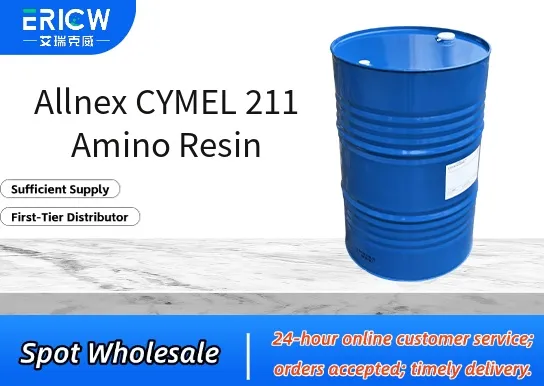
Highly reactive melamine-formaldehyde resin with excellent crosslinking efficiency.
Low formaldehyde emission profile, supporting sustainable coating formulations.
Good compatibility with acrylic, polyester, and alkyd resins in solventborne systems.
Enables fast cure at moderate baking temperatures (140–160 °C).
Delivers superior hardness, chemical resistance, and gloss retention in final films.
Automotive OEM and refinish topcoats.
Industrial coil coatings for metal roofing and appliances.
General-purpose can and closure coatings.
Powder coating hybrids requiring enhanced flow and leveling.
High-performance wood finishes for furniture and cabinetry.
| Chemical Type | Melamine-formaldehyde crosslinker |
| Product Form | Clear to pale yellow liquid |
| Appearance | Homogeneous, low-viscosity solution |
| Primary Applications | Solventborne industrial coatings |
| Key Features | Low-bake reactivity, low free formaldehyde |
| Benefits | Improved film hardness, durability, and gloss |
| Recommended Solvents | Aliphatic hydrocarbons, esters, ketones |
| Storage Stability | ≥12 months at 20–25 °C in sealed container |
Q1: What is the primary function of CYMEL 211 in coating formulations?
A: CYMEL 211 acts as a highly reactive crosslinker for hydroxyl- and amide-functional resins—such as acrylics, polyesters, and alkyds—enabling durable, thermoset film formation upon thermal cure. Its high methylol content and low formaldehyde emission profile support efficient network development with good storage stability in solventborne systems.
Q2: Is CYMEL 211 suitable for low-bake or ambient-cure applications?
A: CYMEL 211 is optimized for thermal curing, typically requiring bake temperatures above 120 °C for full crosslinking. While it can be formulated with strong acid catalysts to extend reactivity at lower temperatures, it is not designed for true ambient-cure performance and should not be relied upon without thermal input in final film formation.
Q3: How does CYMEL 211 compare to other melamine-formaldehyde resins in terms of compatibility and stability?
A: CYMEL 211 offers broad compatibility with common solventborne binder systems and exhibits excellent shelf life in properly inhibited formulations. Its partially alkylated structure provides improved solubility and reduced water sensitivity compared to highly reactive, non-alkylated melamines—making it particularly well-suited for high-gloss industrial and coil coatings where clarity and long-term storage are critical.
Q4: What catalysts are commonly used with CYMEL 211, and how do they influence cure behavior?
A: Strong acid catalysts—such as p-toluenesulfonic acid (p-TSA), dinonylnaphthalene disulfonic acid (DNDSSA), or blocked acid systems—are routinely employed to accelerate the crosslinking reaction. Catalyst selection and concentration significantly affect gel time, pot life, and final film hardness; formulation optimization is recommended to balance reactivity, storage stability, and cured properties.
Contact With Us:
E-mail: wangxingqiang@ericwchem.com
Have a Questions? Call Us:
Add:
Building A1, Jiete Industrial Park, Huangpu District, Guangzhou City, Guangdong Province, China