English
 Español
 tiếng việt
 русский
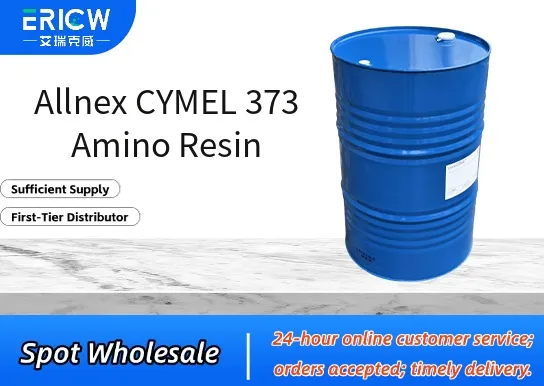
Highly reactive melamine-formaldehyde resin with excellent compatibility in solvent-based and high-solids coatings.
Offers superior cure speed at low to moderate baking temperatures (120–150 °C).
Delivers outstanding hardness, chemical resistance, and gloss retention in thermoset finishes.
Low formaldehyde content meets stringent regulatory requirements for industrial coating systems.
Excellent hydrolytic stability when properly formulated with compatible resins and catalysts.
Automotive OEM and refinish topcoats requiring high durability and appearance.
Industrial metal coatings for appliances, furniture, and office equipment.
Coil coatings for pre-painted steel and aluminum substrates.
General-purpose can and closure coatings for food and beverage packaging.
Wood finishing systems where rapid through-cure and mar resistance are critical.
| Chemical Type | Melamine-formaldehyde resin |
| Product Form | Liquid |
| Appearance | Clear, pale yellow to amber liquid |
| Solvent Content | Approx. 60–65% (isobutanol/butanol blend) |
| Non-Volatile Content | 35–40% (by weight, 105 °C, 60 min) |
| Viscosity (25 °C) | 20–40 mPa·s (Brookfield RV, spindle #2, 20 rpm) |
| pH (10% in water) | 7.5–9.0 |
| Key Features | Low-bake reactivity, low formaldehyde emission, broad formulation latitude |
Q1: What is the primary function of CYMEL 373 in coating formulations?
A: CYMEL 373 acts as a highly reactive crosslinker for hydroxyl- and amide-functional resins—such as acrylics, polyesters, and alkyds—enabling durable, thermoset film formation upon thermal cure. It contributes to improved hardness, chemical resistance, and gloss retention in final coatings.
Q2: Is CYMEL 373 suitable for low-bake or ambient-cure systems?
A: CYMEL 373 is designed for thermal curing, typically requiring bake temperatures above 120 °C for efficient crosslinking. While it can be formulated with strong acid catalysts to lower the onset temperature, it is not intended for true ambient-cure applications without catalysis and extended dwell time.
Q3: How does CYMEL 373 compare to other melamine-formaldehyde resins in terms of compatibility and storage stability?
A: CYMEL 373 offers excellent compatibility with a broad range of backbone resins and solvents commonly used in industrial coatings. Its partially alkylated structure provides good shelf life in solvent-based systems when stored under recommended conditions—cool, dry, and away from strong acids or moisture.
Q4: What catalysts are typically recommended for use with CYMEL 373?
A: Strong acid catalysts—such as p-toluenesulfonic acid (pTSA), dinonylnaphthalene disulfonic acid (DNDSSA), or blocked sulfonic acids—are commonly employed to accelerate the cure reaction. Catalyst selection and dosage depend on the desired pot life, cure schedule, and end-use performance requirements.
Q5: Can CYMEL 373 be used in waterborne coating systems?
A: Yes—CYMEL 373 is compatible with many water-reducible and hybrid systems, especially when properly emulsified or co-solvent stabilized. However, hydrolytic stability must be carefully managed; formulation pH, water content, and storage conditions significantly influence performance and shelf life.
Contact With Us:
E-mail: wangxingqiang@ericwchem.com
Have a Questions? Call Us:
Add:
Building A1, Jiete Industrial Park, Huangpu District, Guangzhou City, Guangdong Province, China