English
 Español
 tiếng việt
 русский
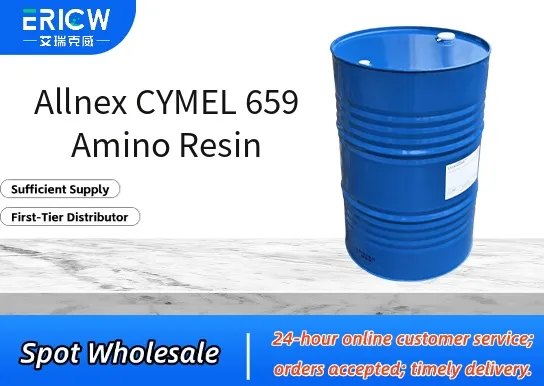
High reactivity with hydroxyl-functional resins, enabling efficient crosslinking at low to moderate cure temperatures.
Excellent compatibility with acrylic, polyester, and alkyd resin systems for broad formulation flexibility.
Low formaldehyde release profile, supporting compliance with stringent industrial emissions and workplace safety requirements.
Good storage stability in solvent-based systems when formulated within recommended pH and moisture limits.
Delivers superior hardness, chemical resistance, and gloss retention in thermoset coatings.
Automotive OEM and refinish topcoats requiring high durability and appearance performance.
Industrial maintenance coatings for metal substrates exposed to harsh environmental conditions.
General-purpose coil coatings for pre-painted steel and aluminum applications.
Appliance finishes demanding excellent mar resistance and long-term color stability.
Can and closure coatings where food-contact compliance and can integrity are critical.
| Chemical Type | Methylated melamine-formaldehyde resin |
| Product Form | Liquid, solvent-based (typically xylene or aromatic hydrocarbon blend) |
| Appearance | Clear, pale yellow to amber liquid |
| Solids Content (wt%) | 80–84% |
| Viscosity (mPa·s, 25°C) | 1,200–2,500 |
| Acid Number (mg KOH/g) | ≤ 3.0 |
| Density (g/cm³, 25°C) | 1.08–1.12 |
| Primary Applications | Crosslinker for hydroxyl-functional thermosetting coatings |
Q1: What is the primary function of CYMEL 659 in coating formulations?
A: CYMEL 659 acts as a highly reactive crosslinking agent for hydroxyl- and amide-functional resins—particularly acrylics, polyesters, and alkyds—enabling thermoset film formation with improved hardness, chemical resistance, and cure efficiency at moderate baking temperatures.
Q2: How does CYMEL 659 differ from other melamine-formaldehyde resins like CYMEL 303 or CYMEL 323?
A: CYMEL 659 is a high-methylol, low-alkylated melamine resin offering enhanced compatibility with polar resin systems and reduced volatility during cure. It provides better storage stability in solventborne systems compared to highly alkylated analogues, while maintaining reactivity suitable for industrial coil and general metal coatings.
Q3: Is CYMEL 659 suitable for low-bake or ambient-cure applications?
A: CYMEL 659 is designed for thermal curing, typically requiring bake temperatures above 120 °C for efficient crosslinking. It is not recommended for true ambient-cure systems; however, it can be formulated with acid catalysts to enable lower-temperature cures in specific industrial applications where full cure kinetics remain acceptable.
Q4: What are key handling and storage considerations for CYMEL 659?
A: Store in tightly sealed containers under cool, dry conditions, away from strong acids, bases, and moisture. Prolonged exposure to humidity or elevated temperatures may lead to premature condensation or viscosity increase. Always follow good industrial hygiene practices when handling—use appropriate ventilation and personal protective equipment.
Q5: Can CYMEL 659 be used in waterborne coating systems?
A: Yes—CYMEL 659 demonstrates reasonable compatibility in many water-reducible and hybrid systems, especially when stabilized with co-solvents and properly balanced pH. However, its hydrolytic sensitivity means formulation design must carefully control water content, pH, and catalyst selection to ensure shelf life and film performance.
Contact With Us:
E-mail: wangxingqiang@ericwchem.com
Have a Questions? Call Us:
Add:
Building A1, Jiete Industrial Park, Huangpu District, Guangzhou City, Guangdong Province, China