English
 Español
 tiếng việt
 русский
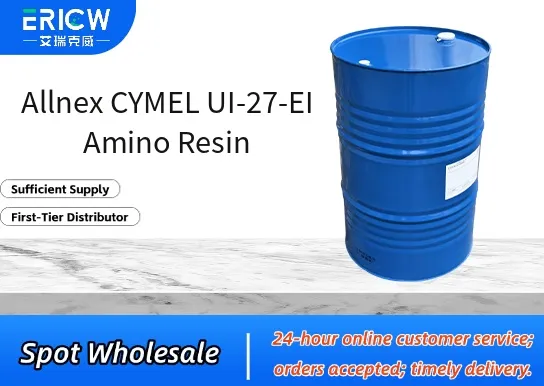
Highly reactive melamine-formaldehyde resin with ethyl ether and isobutyl ether co-moieties for balanced cure speed and storage stability.
Excellent compatibility with acrylic, polyester, and alkyd resins in solventborne and high-solids coating systems.
Delivers superior hardness, chemical resistance, and gloss retention in thermoset coatings.
Low free formaldehyde content, supporting compliance with stringent industrial hygiene and regulatory requirements.
Optimized for low-bake curing (130–150 °C), enabling energy-efficient manufacturing processes.
Automotive OEM and refinish topcoats requiring high durability and aesthetic performance.
Industrial maintenance coatings for metal substrates exposed to harsh environmental conditions.
Appliance coatings demanding excellent mar resistance and detergent stability.
General-purpose coil coatings where rapid through-cure and film integrity are critical.
Can and closure coatings requiring adhesion, flexibility, and food-contact compliant formulations.
| Chemical Type | Melamine-formaldehyde resin (ethyl/isobutyl ether crosslinker) |
| Product Form | Clear to pale yellow liquid |
| Appearance | Homogeneous, mobile liquid at 25 °C |
| Non-Volatile Content | 80–84 wt% (ASTM D1259) |
| Viscosity (25 °C) | 80–120 mPa·s (ASTM D4287) |
| Density (25 °C) | 1.12–1.16 g/cm³ (ASTM D1475) |
| Solvent | Isobutanol and xylene blend |
| Primary Applications | Thermosetting coatings for metal substrates |
Q1: What is the primary function of CYMEL UI-27-EI in coating formulations?
A: CYMEL UI-27-EI is a highly reactive, low-viscosity melamine-formaldehyde amino resin designed primarily as a crosslinker for hydroxyl-functional resins—such as acrylics, alkyds, and polyesters—in thermosetting solventborne and high-solids coatings. It enables rapid cure at moderate baking temperatures while contributing to hardness, chemical resistance, and gloss retention.
Q2: Is CYMEL UI-27-EI suitable for low-bake or ambient-cure systems?
A: While CYMEL UI-27-EI is optimized for thermal cure (typically 120–160 °C), it can be formulated into low-bake systems with appropriate catalyst selection and resin compatibility. However, it is not recommended for true ambient-cure applications without strong acid catalysis and extended air-dry time, as full network development requires thermal activation.
Q3: How does CYMEL UI-27-EI differ from conventional high-molecular-weight melamine resins?
A: Unlike traditional melamine resins, CYMEL UI-27-EI features a tailored low-molecular-weight structure and etherification profile, resulting in lower viscosity, improved solubility in common organic solvents, and enhanced reactivity with hydroxyl groups. This allows for higher solids content, better flow/leveling, and reduced VOC contribution in finished coatings.
Q4: What catalysts are commonly used with CYMEL UI-27-EI?
A: Standard acidic catalysts such as p-toluenesulfonic acid (p-TSA), dinonylnaphthalene disulfonic acid (DNDSSA), or blocked acid catalysts are typically employed. Catalyst type and dosage depend on the desired pot life, cure schedule, and substrate sensitivity—stronger acids accelerate reaction but may reduce storage stability.
Q5: Can CYMEL UI-27-EI be used in water-reducible or hybrid systems?
A: Yes—CYMEL UI-27-EI exhibits good compatibility with water-reducible alkyd and acrylic dispersions when properly co-solvented and stabilized. Its low volatility and controlled hydrolytic sensitivity support use in hybrid solvent/water systems, though formulation pH and moisture content must be carefully managed to ensure shelf life and film integrity.
Contact With Us:
E-mail: wangxingqiang@ericwchem.com
Have a Questions? Call Us:
Add:
Building A1, Jiete Industrial Park, Huangpu District, Guangzhou City, Guangdong Province, China