English
 Español
 tiếng việt
 русский
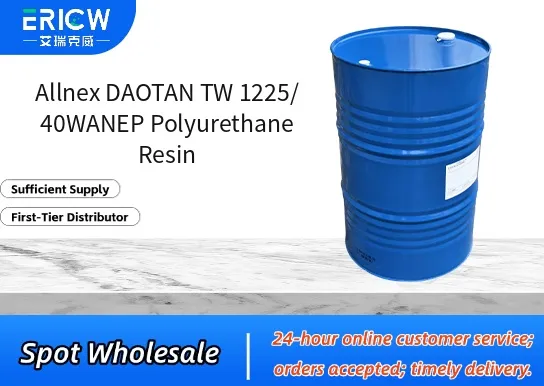
High-performance aliphatic polyurethane dispersion offering excellent UV resistance and gloss retention.
Waterborne formulation with low VOC content, supporting sustainable coating solutions.
Good compatibility with acrylic and polyester dispersions for hybrid resin systems.
Enhanced flexibility and abrasion resistance suitable for demanding topcoat applications.
Optimized rheology for easy processing and spray application without excessive thickener demand.
Waterborne wood coatings for furniture and interior joinery.
Architectural wall and ceiling coatings requiring durability and low emissions.
Industrial maintenance coatings for metal substrates in mild environments.
Plastic coatings for automotive interior trim and consumer electronics housings.
Hybrid waterborne topcoats for flooring and decorative concrete finishes.
| Chemical Type | Aliphatic polyurethane dispersion |
| Product Form | White to slightly yellow liquid |
| Appearance | Opaque, homogeneous dispersion |
| Primary Applications | Topcoats for wood, plastic, and metal substrates |
| Key Features | UV-stable, waterborne, low-VOC, flexible film formation |
| Benefits | Reduced environmental impact, improved handling safety, good substrate adhesion |
| pH (at 25°C) | 7.5–8.5 |
| Solids Content (wt%) | 40 ± 1 |
Q1: What is the primary function of DAOTAN TW 1225/40WANEP in polyurethane systems?
A: DAOTAN TW 1225/40WANEP is a waterborne polyurethane dispersion designed to serve as a film-forming binder or reactive modifier, enhancing flexibility, abrasion resistance, and low-temperature performance in coatings and adhesives.
Q2: Is DAOTAN TW 1225/40WANEP compatible with common crosslinkers used in industrial PU coatings?
A: Yes, it is formulated to be compatible with standard aqueous or blocked isocyanate crosslinkers, as well as aziridine and carbodiimide types—compatibility should be verified under actual formulation conditions including pH, solids content, and mixing sequence.
Q3: How does DAOTAN TW 1225/40WANEP perform in terms of drying and film formation at ambient conditions?
A: It exhibits good ambient-temperature film formation due to its optimized particle size and coalescence behavior, enabling cohesive, continuous films without requiring high-temperature curing—though final properties benefit from controlled post-drying conditions.
Q4: Can DAOTAN TW 1225/40WANEP be blended with acrylic dispersions or other waterborne resins?
A: Yes, it is generally miscible with many acrylic and styrene-acrylic dispersions; however, physical stability and long-term compatibility must be assessed experimentally, particularly regarding viscosity development, phase separation, and storage stability.
Q5: What are typical handling and storage recommendations for this resin?
A: Store in tightly sealed containers at temperatures between 5 °C and 30 °C, avoiding freezing and prolonged exposure to direct sunlight; agitation before use is recommended to ensure uniformity after storage.
Contact With Us:
E-mail: wangxingqiang@ericwchem.com
Have a Questions? Call Us:
Add:
Building A1, Jiete Industrial Park, Huangpu District, Guangzhou City, Guangdong Province, China