English
 Español
 tiếng việt
 русский
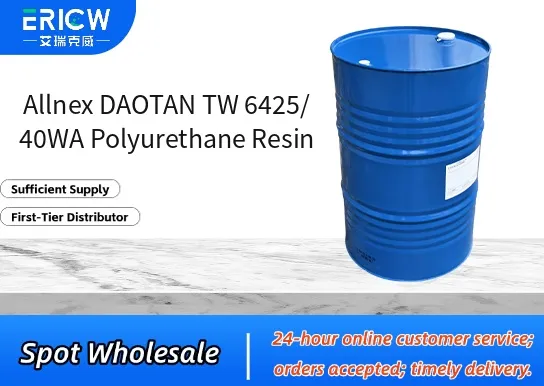
Waterborne aliphatic polyurethane dispersion offering excellent UV resistance and long-term gloss retention.
Low VOC formulation compliant with stringent global environmental regulations including EU REACH and US EPA standards.
Good film-forming properties with balanced hardness, flexibility, and abrasion resistance.
Compatible with acrylic and polyester co-resins for hybrid system optimization.
Stable storage performance with shelf life of ≥12 months at 5–30°C in original sealed container.
High-performance waterborne wood coatings for furniture and interior joinery.
Architectural coatings requiring durable, low-odor finishes for interior walls and ceilings.
Industrial maintenance coatings for metal substrates in mild-corrosion environments.
Plastic coatings for rigid PVC, ABS, and polycarbonate substrates.
Coatings for laminated flooring and engineered wood panels.
| Chemical Type | Aliphatic waterborne polyurethane dispersion |
| Product Form | Liquid dispersion |
| Appearance | Opaque white to slightly bluish liquid |
| pH (at 25°C) | 7.8–8.5 |
| Solids Content (wt%) | 40.0 ± 1.0 |
| Viscosity (mPa·s, Brookfield RVT, spindle #3, 20 rpm, 25°C) | 150–400 |
| Density (g/cm³, 25°C) | 1.02–1.05 |
| Minimum Film Formation Temperature (MFFT) | ≈12°C |
Q1: What is the primary function of DAOTAN TW 6425/40WA in polyurethane systems?
A: DAOTAN TW 6425/40WA is a waterborne polyurethane dispersion designed to serve as a film-forming binder or reactive modifier in high-performance coatings and adhesives, offering good mechanical strength, flexibility, and compatibility with other water-based resins.
Q2: Is DAOTAN TW 6425/40WA compatible with common crosslinkers used in industrial PU coatings?
A: Yes, it shows good reactivity with standard aqueous crosslinkers such as aziridine, carbodiimide, and blocked isocyanate types, enabling enhanced chemical resistance and durability in cured films — compatibility should be verified experimentally for specific formulations.
Q3: How does DAOTAN TW 6425/40WA perform under ambient curing conditions?
A: It forms cohesive, continuous films at room temperature with moderate drying speed; full property development typically benefits from mild thermal post-curing (e.g., 60–80 °C), depending on film thickness and substrate.
Q4: Can DAOTAN TW 6425/40WA be blended with acrylic dispersions or other waterborne polymers?
A: Yes, it is generally miscible with many anionic and non-ionic acrylic dispersions, allowing formulators to tailor hardness, flexibility, and cost-performance balance — stability and film integrity should be assessed through compatibility testing.
Contact With Us:
E-mail: wangxingqiang@ericwchem.com
Have a Questions? Call Us:
Add:
Building A1, Jiete Industrial Park, Huangpu District, Guangzhou City, Guangdong Province, China