English
 Español
 tiếng việt
 русский
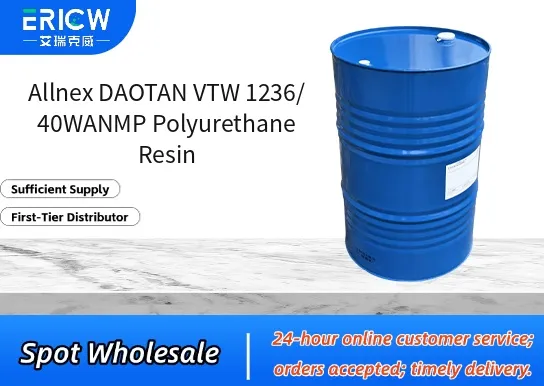
Waterborne aliphatic polyurethane dispersion offering excellent UV resistance and long-term gloss retention.
Low VOC formulation compliant with stringent global environmental regulations including EU REACH and US EPA standards.
Good film-forming capability at ambient temperature with balanced hardness and flexibility.
Compatible with common co-solvents and acrylic or polyester dispersions for hybrid coating systems.
Stable storage performance with shelf life of ≥12 months at 5–30 °C when unopened.
High-performance waterborne wood coatings for furniture, flooring, and cabinetry.
Industrial maintenance coatings for metal substrates requiring corrosion resistance and aesthetic durability.
Interior architectural coatings where low odor, fast drying, and non-yellowing properties are critical.
Coatings for plastic substrates including ABS and PC in automotive interior trim and consumer electronics.
Basecoat/clearcoat systems in premium decorative finishing applications.
| Chemical Type | Aliphatic waterborne polyurethane dispersion |
| Product Form | Liquid dispersion (aqueous) |
| Appearance | Opaque white to slightly bluish milky liquid |
| pH (at 25 °C) | 7.5 – 8.5 |
| Solids Content (wt%) | 38.0 – 42.0 |
| Viscosity (mPa·s, Brookfield LVT, #2 spindle, 20 rpm, 25 °C) | 150 – 500 |
| Density (g/cm³, 25 °C) | 1.02 – 1.06 |
| Minimum Film Formation Temperature (MFFT) | ≈ 15 °C |
Q1: What is the primary function of DAOTAN VTW 1236/40WANMP in polyurethane coatings and inks?
A: DAOTAN VTW 1236/40WANMP is a waterborne polyurethane dispersion designed to enhance film formation, flexibility, and adhesion—particularly on challenging substrates such as plastics, metals, and treated papers. It functions as a binder or co-binder to improve mechanical durability and chemical resistance without compromising water-based processing advantages.
Q2: Is this resin compatible with common waterborne acrylic or polyester dispersions?
A: Yes, DAOTAN VTW 1236/40WANMP exhibits good compatibility with many commercially available waterborne acrylics, polyesters, and hybrid dispersions. Compatibility should be verified experimentally in the final formulation due to sensitivity to pH, ionic strength, and surfactant systems.
Q3: How does the resin perform under ambient curing conditions versus forced drying?
A: The resin forms continuous, cohesive films at ambient temperature, though full property development—including hardness and solvent resistance—typically benefits from mild thermal treatment (e.g., 60–80 °C for 10–30 minutes). Drying kinetics and final film quality depend on substrate, film thickness, and ambient humidity.
Q4: Can it be used in food-contact applications?
A: DAOTAN VTW 1236/40WANMP is not pre-approved for direct food contact. Its suitability for indirect food-contact applications (e.g., packaging overprint varnishes) requires full regulatory assessment by the formulator, including evaluation of all raw materials, processing conditions, and intended use parameters.
Contact With Us:
E-mail: wangxingqiang@ericwchem.com
Have a Questions? Call Us:
Add:
Building A1, Jiete Industrial Park, Huangpu District, Guangzhou City, Guangdong Province, China