English
 Español
 tiếng việt
 русский
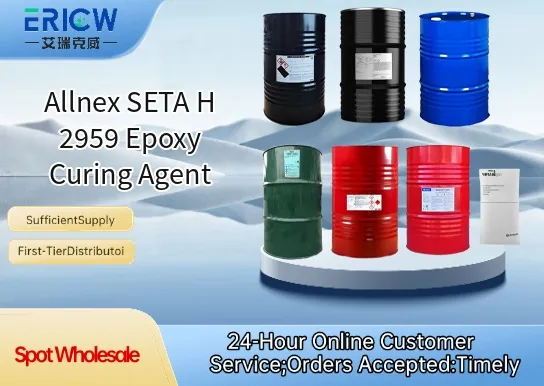
Highly reactive aliphatic amine-based curing agent for fast ambient-cure epoxy systems.
Excellent chemical resistance, particularly to solvents, acids, and alkalis after full cure.
Low viscosity enables easy handling, precise metering, and superior wetting of fillers and substrates.
Low volatility and low odor profile support safer industrial processing and improved workplace compliance.
Enables high glass transition temperature (Tg) and excellent mechanical properties in cured networks.
Industrial flooring systems requiring rapid return-to-service and abrasion resistance.
Protective coatings for steel structures, pipelines, and offshore equipment.
Electrical encapsulation and insulating compounds for transformers and busbars.
Adhesives and structural bonding formulations in automotive and rail applications.
Composite matrix resins for wind blade and marine laminates.
| Chemical Type | Aliphatic polyamine |
| Product Form | Liquid |
| Appearance | Clear, pale yellow liquid |
| Primary Applications | Epoxy coatings, adhesives, composites, and encapsulation |
| Key Features | Ambient-cure capability, low viscosity, low volatility, high reactivity |
| Benefits | Short pot life control, excellent adhesion, high Tg, good flexibility–toughness balance |
| Storage Stability | 12 months at 20–25°C in original sealed container |
| Compatible Resins | Standard DGEBA and modified epoxy resins |
Q1: What is the primary chemical nature of SETA H 2959?
A: SETA H 2959 is a latent, amine-based epoxy curing agent formulated as a solid dispersion. It features controlled reactivity and is designed for one-component epoxy systems requiring extended pot life and rapid thermal cure.
Q2: How does SETA H 2959 compare to traditional dicyandiamide (DICY) in terms of processing and performance?
A: Compared to DICY, SETA H 2959 offers improved dispersibility in epoxy resins, reduced dust generation during handling, and more consistent cure profiles at elevated temperatures—often enabling faster cycle times without compromising final mechanical properties.
Q3: What are the recommended storage conditions for optimal shelf life?
A: Store SETA H 2959 in its original sealed container at temperatures below 25 °C and in low-humidity conditions. Prolonged exposure to moisture or elevated temperatures may affect dispersion stability and latency.
Q4: Is SETA H 2959 suitable for powder coating applications?
A: Yes—it is specifically engineered for use in thermosetting powder coatings, where its fine particle size, thermal latency, and clean cure behavior support high-gloss finishes and excellent film integrity after baking.
Q5: How should dosage be determined for a given epoxy formulation?
A: Dosage depends on the specific epoxy resin type, desired cure schedule, and end-use performance requirements. It is typically used at low concentrations relative to resin weight, and optimization is best achieved through small-scale thermal analysis (e.g., DSC) and practical cure trials.
Contact With Us:
E-mail: wangxingqiang@ericwchem.com
Have a Questions? Call Us:
Add:
Building A1, Jiete Industrial Park, Huangpu District, Guangzhou City, Guangdong Province, China