English
 Español
 tiếng việt
 русский
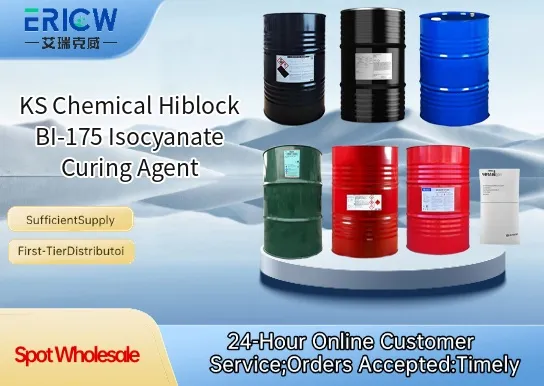
Low-viscosity aliphatic polyisocyanate offering excellent compatibility with hydroxyl-functional acrylic and polyester resins.
Non-yellowing formulation ensures long-term color stability in premium clearcoats and topcoats.
Fast ambient-cure capability with balanced reactivity—enables efficient production without excessive oven energy.
High functional group uniformity delivers consistent crosslink density and superior film hardness.
Low monomeric TDI and HDI content, meeting stringent VOC and occupational safety compliance requirements.
Automotive OEM clearcoats and basecoat/clearcoat systems.
High-performance industrial maintenance coatings for rail, marine, and agricultural equipment.
Premium architectural metal coatings requiring UV resistance and gloss retention.
Plastic coatings for automotive interior trim and electronic housings.
Two-component polyurethane wood finishes for furniture and flooring applications.
| Chemical Type | Aliphatic polyisocyanate (hexamethylene diisocyanate trimer) |
| Product Form | Liquid |
| Appearance | Clear, pale yellow to colorless liquid |
| NCO Content (wt%) | 17.0–17.8% |
| Viscosity at 25°C (mPa·s) | 800–1,200 |
| Density at 25°C (g/cm³) | 1.18–1.22 |
| Flash Point (PMCC, °C) | 135–145 |
| Storage Stability (unopened, 25°C) | ≥12 months |
Q1: What is the primary function of Hiblock BI-175 in coating and adhesive formulations?
A: Hiblock BI-175 is a blocked aliphatic isocyanate curing agent designed to provide latent reactivity—remaining stable at ambient temperatures while enabling rapid crosslinking upon thermal activation. It enhances final film hardness, chemical resistance, and durability without premature gelation during storage or processing.
Q2: At what temperature does the blocking group dissociate to release active isocyanate functionality?
A: The deblocking temperature of Hiblock BI-175 typically begins around 120 °C and is fully activated within standard industrial cure cycles (e.g., 130–160 °C for 10–30 minutes), depending on substrate, film thickness, and formulation matrix.
Q3: Is Hiblock BI-175 compatible with hydroxyl-functional acrylics, polyesters, and cellulose esters?
A: Yes—Hiblock BI-175 demonstrates broad compatibility with common hydroxyl-containing resins used in high-performance coatings, including acrylics, saturated polyesters, and modified cellulose derivatives. Compatibility should be verified empirically in the final formulation due to sensitivity to catalysts, solvents, and moisture content.
Q4: How should Hiblock BI-175 be handled and stored to maintain stability?
A: Store in tightly sealed containers under dry, cool conditions (below 30 °C) and protect from moisture, direct sunlight, and strong oxidizing agents. Avoid prolonged exposure to ambient humidity during handling, as residual moisture may lead to premature deblocking or CO₂ evolution.
Contact With Us:
E-mail: wangxingqiang@ericwchem.com
Have a Questions? Call Us:
Add:
Building A1, Jiete Industrial Park, Huangpu District, Guangzhou City, Guangdong Province, China