English
 Español
 tiếng việt
 русский
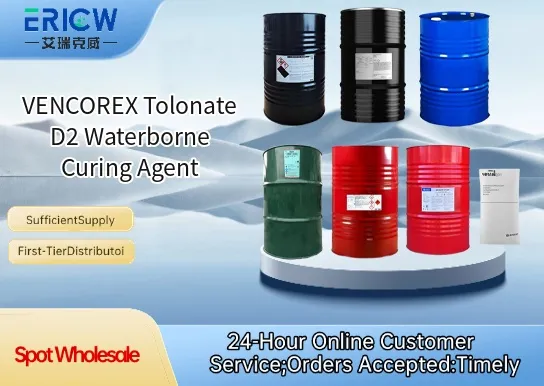
Waterborne polyisocyanate crosslinker designed for low-VOC, high-performance coatings.
Excellent hydrolytic stability and shelf life in aqueous dispersions.
Fast ambient-cure kinetics without requiring catalysts or elevated temperatures.
Superior compatibility with acrylic, polyester, and hybrid waterborne resin systems.
Delivers outstanding hardness, chemical resistance, and gloss retention in final films.
Automotive OEM and refinish waterborne basecoat/clearcoat systems.
Industrial maintenance coatings for metal substrates.
Architectural and decorative waterborne topcoats for interior/exterior use.
Wood finishing coatings requiring low emission and rapid handling.
Plastic coatings for automotive trim and consumer electronics.
| Chemical Type | Aliphatic polyisocyanate (HDI-based) |
| Product Form | Water-dispersible liquid |
| Appearance | Clear to slightly hazy, colorless to pale yellow liquid |
| NCO Content (wt%) | 10.5–11.5% |
| pH (10% in deionized water) | 7.0–8.5 |
| Viscosity (25°C, mPa·s) | 200–600 |
| Solids Content (wt%) | 35–40% |
| Storage Stability (25°C) | ≥6 months in sealed container |
Q1: What is the primary function of Tolonate D2 in waterborne coating systems?
A: Tolonate D2 is a hydrophilically modified aliphatic polyisocyanate designed to serve as a crosslinking agent for waterborne acrylic, polyester, or hybrid dispersions. It enables ambient- or low-bake cure profiles while maintaining good compatibility and colloidal stability in aqueous formulations.
Q2: How does Tolonate D2 differ from conventional hydrophobic polyisocyanates in waterborne applications?
A: Unlike standard hydrophobic polyisocyanates, Tolonate D2 incorporates built-in hydrophilic groups that enhance dispersibility in water without requiring external surfactants or high-shear stabilization. This contributes to improved pot life, reduced foam formation, and more consistent film formation in low-VOC systems.
Q3: Can Tolonate D2 be used in ambient-cure coatings, and what factors influence its reactivity?
A: Yes, Tolonate D2 supports ambient-cure performance, particularly when paired with catalyzed or amine-accelerated systems. Its reactivity is influenced by pH, co-solvent selection, resin functionality, and the presence of latent catalysts—formulators typically adjust these parameters to balance pot life and through-cure development.
Q4: Is Tolonate D2 suitable for industrial maintenance or architectural coatings?
A: Tolonate D2 is widely applied in high-performance industrial maintenance coatings—such as protective finishes for metal substrates—and select architectural topcoats where durability, gloss retention, and chemical resistance are critical. Its aliphatic nature ensures excellent UV stability and minimal yellowing over time.
Q5: What are typical handling and storage recommendations for this curing agent?
A: Store Tolonate D2 in tightly sealed containers under dry, cool conditions (preferably below 30 °C) and protect from moisture ingress. Avoid prolonged exposure to humidity or water during handling, as premature reaction may affect viscosity and shelf life. Always follow standard industrial hygiene practices for isocyanate-containing materials.
Contact With Us:
E-mail: wangxingqiang@ericwchem.com
Have a Questions? Call Us:
Add:
Building A1, Jiete Industrial Park, Huangpu District, Guangzhou City, Guangdong Province, China