English
 Español
 tiếng việt
 русский
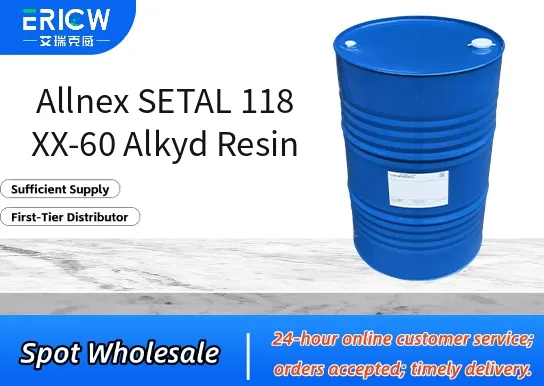
Medium-oil-length alkyd resin offering balanced drying speed and film flexibility.
Excellent compatibility with common solvents, vinyls, acrylics, and melamine formaldehyde resins.
Provides good gloss retention and long-term durability in ambient-cure coatings.
Formulated for low VOC compliance in decorative and protective coating systems.
Delivers strong adhesion to ferrous and non-ferrous metal substrates.
General-purpose decorative architectural paints (interior/exterior walls and trim).
Industrial maintenance coatings for machinery, pipelines, and structural steel.
Marine topside coatings requiring weather resistance and recoatability.
Wood finishing systems including furniture, cabinetry, and interior millwork.
| Chemical Type | Medium-oil modified alkyd resin |
| Product Form | Liquid solution in aromatic hydrocarbons |
| Appearance | Clear, pale yellow to amber liquid |
| Non-Volatile Content (wt%) | 60 ± 1% |
| Viscosity (25°C, mPa·s) | 80–120 (Brookfield RV, spindle #3, 20 rpm) |
| Acid Value (mg KOH/g) | 6–9 |
| Density (25°C, g/cm³) | 0.94–0.97 |
| Solubility | Compatible with xylene, solvent naphtha, and ester-based thinners |
Q1: What is the primary application field for SETAL 118 XX-60?
A: SETAL 118 XX-60 is a medium-oil alkyd resin designed primarily for use in solventborne industrial maintenance and protective coatings, including general-purpose enamels, primers, and topcoats where balanced drying performance, gloss retention, and substrate adhesion are required.
Q2: Is SETAL 118 XX-60 compatible with common crosslinkers such as melamine-formaldehyde or polyisocyanates?
A: Yes — it is formulated to be compatible with amino resins (e.g., melamine-formaldehyde) for baking systems, and can also be used in ambient-cure formulations with appropriate driers or co-resins. Compatibility with polyisocyanates is limited and not recommended without thorough formulation testing, as it is not an OH-functional resin intended for two-component polyurethane systems.
Q3: How does SETAL 118 XX-60 perform in terms of drying behavior and film formation?
A: It exhibits good through-dry and surface-dry balance under ambient conditions when used with conventional cobalt- or manganese-based driers. Film formation yields moderate hardness and flexibility, supporting recoatability and resistance to minor mechanical stress in typical industrial coating applications.
Q4: Can SETAL 118 XX-60 be thinned with standard hydrocarbon solvents?
A: Yes — it is readily soluble in common aromatic and aliphatic hydrocarbon solvents (e.g., xylene, high-flash naphtha), as well as ketones like MEK or MIBK. Solvent selection should consider evaporation rate, VOC compliance requirements, and compatibility with other formulation components.
Q5: What are key handling and storage recommendations for this resin?
A: Store in tightly sealed containers in a cool, dry, and well-ventilated area, away from direct sunlight and ignition sources. Avoid prolonged exposure to moisture or strong oxidizing agents. Shelf life is typically 12 months from date of manufacture when stored under recommended conditions.
Contact With Us:
E-mail: wangxingqiang@ericwchem.com
Have a Questions? Call Us:
Add:
Building A1, Jiete Industrial Park, Huangpu District, Guangzhou City, Guangdong Province, China