English
 Español
 tiếng việt
 русский
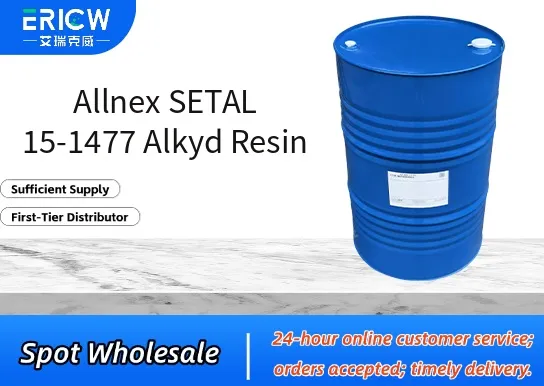
Medium-oil-length alkyd resin based on phthalic anhydride and soybean oil fatty acids.
Designed for excellent through-dry, hardness development, and gloss retention in air-drying systems.
Offers balanced flexibility and chemical resistance for general-purpose industrial coatings.
Compatible with common hydrocarbon solvents and conventional drying agents (cobalt, manganese).
Supports good pigment wetting and substrate adhesion on metal and wood substrates.
General-purpose maintenance coatings for industrial equipment and infrastructure.
Air-drying enamel finishes for metal furniture and agricultural machinery.
Wood coatings including primers and topcoats for interior joinery and cabinetry.
Undercoats and mid-coats in multi-layer industrial coating systems.
Repair and touch-up coatings requiring ambient-cure performance.
| Chemical Type | Phthalic–soybean oil alkyd resin |
| Product Form | Liquid |
| Appearance | Pale yellow to amber viscous liquid |
| Primary Applications | Air-drying industrial enamels, maintenance coatings, wood finishes |
| Key Features | Medium oil length, good drying speed, balanced hardness/flexibility |
| Benefits | Easy formulation, reliable ambient cure, broad solvent compatibility |
| Recommended Solvents | Aromatic hydrocarbons (e.g., xylene, high-flash naphtha) |
| Storage Stability | Stable under cool, dry conditions; shelf life ≥12 months unopened |
Q1: What is the primary application area for SETAL 15-1477?
A: SETAL 15-1477 is a medium-oil-length alkyd resin designed primarily for solvent-based industrial maintenance and protective coatings, including general-purpose enamels, primers, and topcoats where balanced drying performance, gloss retention, and substrate adhesion are required.
Q2: Is SETAL 15-1477 compatible with common crosslinkers used in alkyd systems?
A: Yes, SETAL 15-1477 is formulated to be air-drying and is fully compatible with conventional cobalt- or manganese-based driers. It can also be modified or co-reacted with melamine-formaldehyde resins or isocyanates in baked or hybrid systems, subject to formulation optimization and compatibility testing.
Q3: How does SETAL 15-1477 perform in terms of yellowing resistance?
A: As a conventional alkyd resin based on phthalic anhydride and fatty acids, SETAL 15-1477 exhibits typical oxidative drying behavior and moderate yellowing upon prolonged exposure to UV light and heat—making it suitable for indoor or sheltered applications, but less ideal for exterior clear coats requiring high non-yellowing performance.
Q4: What solvents are recommended for diluting SETAL 15-1477?
A: SETAL 15-1477 dissolves readily in common aromatic and aliphatic hydrocarbon solvents such as xylene, mineral spirits, and high-flash naphthas. It is generally not recommended for use with strong polar solvents like ketones or alcohols without prior compatibility assessment.
Q5: Can SETAL 15-1477 be used in low-VOC formulations?
A: While SETAL 15-1477 itself is a solvent-borne resin, it can contribute to VOC-reduced systems when blended with reactive diluents or used in high-solids formulations. Achieving regulatory VOC limits typically requires complementary resin selection, solvent optimization, and process adjustments—not solely reliance on this base alkyd.
Contact With Us:
E-mail: wangxingqiang@ericwchem.com
Have a Questions? Call Us:
Add:
Building A1, Jiete Industrial Park, Huangpu District, Guangzhou City, Guangdong Province, China