English
 Español
 tiếng việt
 русский
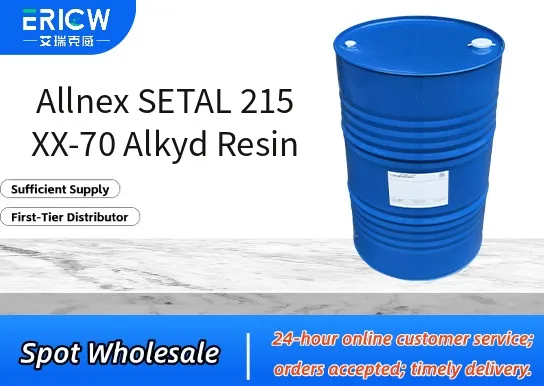
Medium-oil-length alkyd resin offering balanced drying speed and film flexibility.
Excellent compatibility with nitrocellulose, PVC plastisols, and common solvent-based resins.
Provides good gloss retention and resistance to yellowing in interior applications.
Low-viscosity liquid form enables easy handling and formulation without excessive thinning.
Designed for high-solids coatings systems to support VOC-compliant formulations.
Interior wood finishes including furniture, cabinets, and moldings.
General-purpose industrial maintenance coatings for metal substrates.
Decorative architectural coatings for interior trim and doors.
Basecoats and clearcoats in low-VOC decorative varnish systems.
| Chemical Type | Medium-oil alkyd resin (glycerol-phthalic anhydride based) |
| Product Form | Clear to pale yellow liquid |
| Appearance | Homogeneous, transparent, free from sediment |
| Solvent Content | Toluene/xylene blend (typical) |
| Non-Volatile Content | 68–72 wt% (at 105°C, 30 min) |
| Viscosity (25°C, Ford Cup #4) | 60–90 seconds |
| Acid Value | 6–10 mg KOH/g |
| Primary Applications | Interior wood and metal coatings; high-gloss decorative varnishes |
Q1: What is the primary application field for SETAL 215 XX-70?
A: SETAL 215 XX-70 is a fast-drying, medium-oil alkyd resin specifically designed for high-performance air-dry decorative and protective coatings, including interior and exterior architectural paints, wood finishes, and general industrial maintenance coatings.
Q2: Is SETAL 215 XX-70 compatible with waterborne systems?
A: SETAL 215 XX-70 is a solvent-borne alkyd resin and is not inherently water-dispersible. It may be incorporated into hybrid or water-reducible systems when properly emulsified or formulated with co-solvents and surfactants, but compatibility must be verified experimentally in the target formulation.
Q3: How does SETAL 215 XX-70 contribute to film formation and drying performance?
A: Due to its optimized fatty acid composition and molecular architecture, SETAL 215 XX-70 promotes rapid autoxidative crosslinking, resulting in good through-dry, hardness development, and early block resistance—making it well-suited for applications requiring efficient production throughput.
Q4: Can SETAL 215 XX-70 be used in combination with acrylic or polyester resins?
A: Yes, SETAL 215 XX-70 exhibits good compatibility with many common synthetic resins—including solution acrylics and saturated polyesters—enabling formulators to tailor balance between flexibility, gloss, and chemical resistance in hybrid binder systems.
Q5: What solvents are typically recommended for dissolving or diluting SETAL 215 XX-70?
A: The resin dissolves readily in common aromatic and aliphatic hydrocarbon solvents (e.g., xylene, Solvesso™ types, high-flash naphthas) as well as oxygenated solvents such as butyl acetate and ethyl acetate. Selection should consider VOC regulations, evaporation rate requirements, and compatibility with other formulation components.
Contact With Us:
E-mail: wangxingqiang@ericwchem.com
Have a Questions? Call Us:
Add:
Building A1, Jiete Industrial Park, Huangpu District, Guangzhou City, Guangdong Province, China