English
 Español
 tiếng việt
 русский
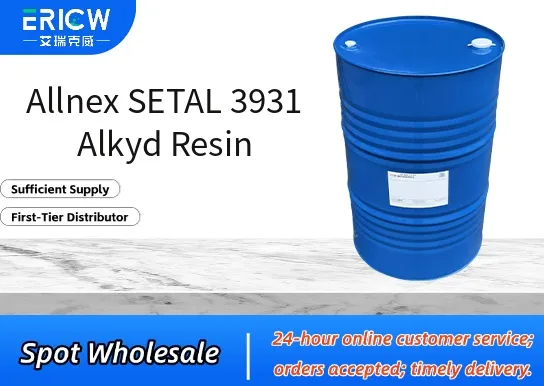
Medium-oil-length alkyd resin based on phthalic anhydride and soybean oil fatty acids.
Designed for excellent through-dry performance and good hardness development in air-drying systems.
Offers balanced flexibility, gloss retention, and weather resistance in decorative coatings.
Compatible with common amino resins, melamine-formaldehyde crosslinkers, and other alkyds.
Low volatile organic compound (VOC) formulation suitable for compliance with regional coating regulations.
Industrial maintenance coatings for metal structures and equipment.
General-purpose decorative enamels for interior and exterior architectural surfaces.
Wood finishing systems requiring good sandability and film clarity.
Undercoats and primers for ferrous and non-ferrous substrates.
Repair and touch-up coatings in OEM and aftermarket segments.
| Chemical Type | Medium-oil alkyd resin (phthalic/soybean oil) |
| Product Form | Liquid |
| Appearance | Clear to pale yellow viscous liquid |
| Primary Applications | Air-drying industrial and decorative coatings |
| Key Features | Good through-dry, balanced hardness/flexibility, gloss retention |
| Benefits | Reduced surface tackiness, improved recoatability, VOC-compliant formulation |
| Solubility | Compatible with aromatic and aliphatic hydrocarbons, ketones, and esters |
| Storage Stability | Stable under cool, dry conditions for ≥12 months in sealed containers |
Q1: What is the primary application area for SETAL 3931?
A: SETAL 3931 is a medium-oil alkyd resin designed primarily for use in high-performance decorative and protective coatings, including interior and exterior architectural paints, wood finishes, and general industrial maintenance coatings where good gloss retention, drying performance, and substrate adhesion are required.
Q2: Is SETAL 3931 compatible with common crosslinkers used in reactive systems?
A: Yes, SETAL 3931 is formulated to be compatible with standard amino resins (e.g., melamine-formaldehyde) and can be effectively used in thermosetting baking systems. It also demonstrates good compatibility with isocyanate-based hardeners in two-component polyurethane formulations when properly formulated.
Q3: How does SETAL 3931 perform in terms of drying behavior and film formation?
A: SETAL 3931 offers balanced air-drying characteristics with good through-dry and film hardness development. It supports efficient solvent release and forms continuous, flexible films with enhanced resistance to cracking and checking under typical ambient curing conditions.
Q4: Can SETAL 3931 be blended with other resin types?
A: Yes, SETAL 3931 is commonly blended with acrylics, vinyls, and other alkyds to modify viscosity, drying profile, or mechanical properties. Compatibility testing is recommended for each specific blend ratio and solvent system to ensure phase stability and performance consistency.
Contact With Us:
E-mail: wangxingqiang@ericwchem.com
Have a Questions? Call Us:
Add:
Building A1, Jiete Industrial Park, Huangpu District, Guangzhou City, Guangdong Province, China