English
 Español
 tiếng việt
 русский
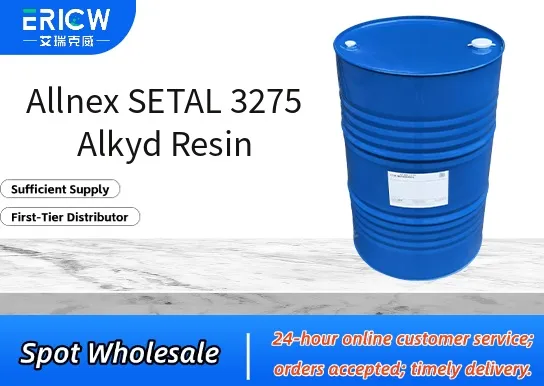
Medium-oil-length alkyd resin based on phthalic anhydride and soybean oil fatty acids.
Designed for excellent through-dry and good hardness development in air-drying coatings.
Offers balanced flexibility, adhesion, and chemical resistance for general-purpose industrial finishes.
Compatible with common solvents including xylene, mineral spirits, and esters.
Provides good gloss retention and film clarity in clear and pigmented systems.
General-purpose industrial maintenance coatings (e.g., machinery, metal furniture).
Air-drying primers and mid-coats for metal substrates.
Enamels for agricultural and construction equipment.
Wood finishing systems requiring moderate durability and aesthetic performance.
| Chemical Type | Medium-oil alkyd resin (phthalic/soya) |
| Product Form | Liquid |
| Appearance | Clear to slightly hazy amber liquid |
| Non-Volatile Content (wt%) | ~60–62% (in xylene) |
| Viscosity (25°C, Brookfield RVT, spindle #4, 20 rpm) | 1,800–2,500 cP |
| Acid Value (mg KOH/g) | 6–9 |
| Density (25°C) | ~0.97–0.99 g/cm³ |
| Solubility | Readily soluble in aromatic hydrocarbons, ketones, and esters |
Q1: What is the primary application area for SETAL 3275?
A: SETAL 3275 is a medium-oil-length alkyd resin designed primarily for solvent-based decorative and protective coatings, including interior/exterior architectural paints, wood finishes, and general-purpose industrial maintenance coatings where balanced drying performance, gloss retention, and substrate adhesion are required.
Q2: Is SETAL 3275 suitable for use in high-solids formulations?
A: Yes — SETAL 3275 offers good viscosity characteristics and compatibility with common organic solvents, enabling its use in medium- to high-solids alkyd systems. Formulators often select it when seeking improved VOC efficiency without compromising film formation or through-dry performance.
Q3: How does SETAL 3275 perform in terms of yellowing resistance?
A: As a cobalt-free, non-yellowing alkyd resin, SETAL 3275 exhibits significantly improved resistance to yellowing compared to traditional cobalt-catalyzed alkyds — particularly under ambient curing conditions and in interior applications where UV exposure is limited.
Q4: Can SETAL 3275 be used in combination with other resins or crosslinkers?
A: Yes — SETAL 3275 demonstrates broad compatibility with common co-resins such as acrylics, vinyls, and melamine-formaldehyde crosslinkers, allowing formulators flexibility in tailoring cure speed, hardness, and chemical resistance for specific end-use requirements.
Contact With Us:
E-mail: wangxingqiang@ericwchem.com
Have a Questions? Call Us:
Add:
Building A1, Jiete Industrial Park, Huangpu District, Guangzhou City, Guangdong Province, China