English
 Español
 tiếng việt
 русский
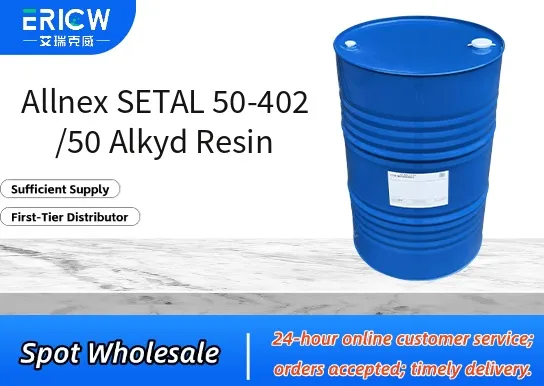
Medium-oil-length alkyd resin based on phthalic anhydride and glycerol for balanced drying and flexibility.
Designed for excellent gloss retention and long-term color stability in exterior applications.
Compatible with a broad range of solvents, pigments, and co-resins including acrylics and melamines.
Delivers good hardness development and sandability for high-quality finishing systems.
Low volatile organic compound (VOC) formulation supporting compliant architectural and industrial coatings.
Architectural solventborne decorative paints for interior and exterior walls.
Industrial maintenance coatings for metal structures and equipment.
Wood finishing systems including varnishes and clear coats for furniture and joinery.
General-purpose enamel coatings requiring good flow, leveling, and durability.
Repair and touch-up coatings for OEM and aftermarket applications.
| Chemical Type | Phthalic–glycerol medium-oil alkyd resin |
| Product Form | Liquid |
| Appearance | Clear to slightly yellow viscous liquid |
| Solvent | Xylene / Solvent naphtha blend |
| Non-Volatile Content (wt%) | ~50 ± 1 % |
| Viscosity (25°C, mPa·s) | 1,800 – 2,400 |
| Acid Value (mg KOH/g) | 6 – 9 |
| Primary Applications | Decorative and protective solventborne coatings |
Q1: What is the primary application area for SETAL 50-402/50?
A: SETAL 50-402/50 is a medium-oil, cobalt-free alkyd resin designed primarily for high-performance air-drying decorative and protective coatings, including industrial maintenance paints, wood finishes, and general-purpose enamels where good gloss retention, through-dry, and substrate adhesion are required.
Q2: Is SETAL 50-402/50 compatible with common crosslinkers and additives?
A: Yes — it exhibits good compatibility with conventional driers (e.g., calcium, zirconium, and manganese-based), urea-formaldehyde resins, melamine-formaldehyde resins, and common solvent-based additives such as rheology modifiers and defoamers. Compatibility testing under actual formulation conditions is recommended prior to full-scale production.
Q3: How does SETAL 50-402/50 differ from traditional cobalt-catalyzed alkyds?
A: Unlike cobalt-containing alkyds, SETAL 50-402/50 is formulated without cobalt, supporting regulatory compliance and sustainability goals while maintaining robust oxidative drying performance through optimized metal-free drier systems and resin architecture.
Q4: What solvents are typically used to dilute SETAL 50-402/50?
A: It is readily soluble in standard aromatic and aliphatic hydrocarbon solvents (e.g., xylene, Solvesso™ types, and high-flash naphthas) as well as common oxygenated solvents like butyl acetate and ethyl acetate — selection depends on VOC requirements and evaporation profile needs of the final formulation.
Contact With Us:
E-mail: wangxingqiang@ericwchem.com
Have a Questions? Call Us:
Add:
Building A1, Jiete Industrial Park, Huangpu District, Guangzhou City, Guangdong Province, China