English
 Español
 tiếng việt
 русский
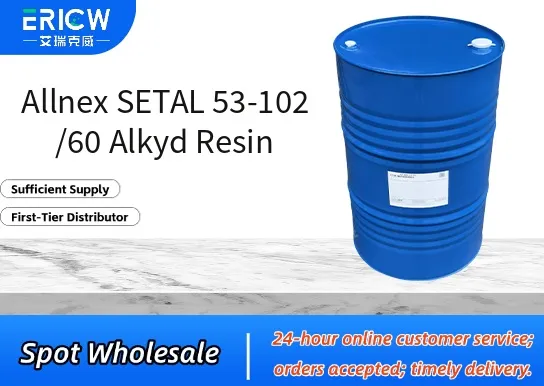
Medium-oil-length alkyd resin offering balanced drying speed and film hardness development.
Excellent compatibility with nitrocellulose, vinyls, and other common coating resins.
Provides good gloss retention and surface smoothness in air-dry coatings.
Formulated for high solubility in common aromatic and aliphatic hydrocarbon solvents.
Delivers robust adhesion to metal, wood, and primed plastic substrates.
General-purpose industrial maintenance coatings.
Decorative wood finishes for furniture and interior trim.
Automotive refinish primers and topcoats (non-OEM).
Coil coating primer systems requiring flexibility and corrosion resistance.
Can coatings for non-food-contact metal packaging.
| Chemical Type | Medium-oil modified alkyd resin |
| Product Form | Liquid |
| Appearance | Clear to slightly yellow viscous liquid |
| Primary Applications | Industrial maintenance, wood finishes, coil coatings, can coatings |
| Key Features | Good drying performance, solvent solubility, substrate adhesion |
| Benefits | Enhanced film build, gloss retention, and compatibility in multi-resin systems |
| Solvent Compatibility | Compatible with xylene, toluene, mineral spirits, and ester blends |
| Storage Stability | Stable under dry, cool conditions (≤30°C) for ≥12 months in original sealed container |
Q1: What is the primary application area for SETAL 53-102/60?
A: SETAL 53-102/60 is a medium-oil-length alkyd resin designed primarily for solventborne industrial maintenance and protective coatings, including general-purpose enamels, primers, and topcoats where good gloss retention, flexibility, and through-dry performance are required.
Q2: Is SETAL 53-102/60 compatible with common crosslinkers used in alkyd systems?
A: Yes — it is fully compatible with conventional driers (e.g., cobalt, zirconium, and calcium-based driers) and can be effectively co-reacted with melamine-formaldehyde resins or urea-formaldehyde resins in baked systems. Compatibility with other resins (e.g., acrylics or vinyls) should be verified experimentally in the final formulation.
Q3: How does SETAL 53-102/60 perform in terms of drying behavior and film formation?
A: It offers balanced air-drying characteristics with good surface dry and through-dry development under ambient conditions. When formulated with appropriate driers, it provides robust film formation with acceptable hardness build and resistance to dust pickup during early drying stages.
Q4: Can SETAL 53-102/60 be used in high-solids coating formulations?
A: Yes — its viscosity profile and solubility in common aromatic and aliphatic hydrocarbon solvents make it suitable for moderate-to-high solids alkyd systems. Formulators may adjust solvent blends and resin concentration to meet target VOC limits while maintaining application and film integrity.
Contact With Us:
E-mail: wangxingqiang@ericwchem.com
Have a Questions? Call Us:
Add:
Building A1, Jiete Industrial Park, Huangpu District, Guangzhou City, Guangdong Province, China