English
 Español
 tiếng việt
 русский
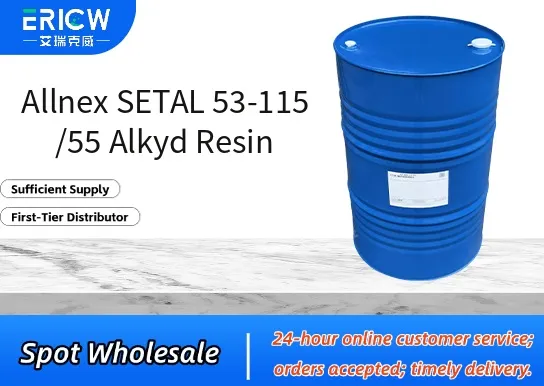
Medium-oil-length alkyd resin offering balanced drying speed and film flexibility.
Excellent compatibility with common hydrocarbon solvents and other resins including acrylics and melamines.
Delivers good gloss retention and weather resistance in ambient-cure coatings.
Formulated for low volatile organic compound (VOC) compliance in architectural and industrial maintenance applications.
Provides strong adhesion to ferrous and non-ferrous metal substrates as well as wood and primed concrete.
Architectural solvent-borne decorative paints for interior and exterior walls.
Industrial maintenance coatings for steel structures, bridges, and pipelines.
General-purpose metal primers and topcoats for agricultural and construction equipment.
Wood finishing systems requiring durable, amber-resistant films with good flow and leveling.
Marine maintenance coatings for above-waterline components and deck finishes.
| Chemical Type | Medium-oil modified phthalic alkyd resin |
| Product Form | Liquid |
| Appearance | Clear to pale yellow viscous liquid |
| Primary Applications | Solvent-borne decorative and protective coatings |
| Key Features | Good drying performance, gloss retention, and substrate adhesion |
| Benefits | Enables VOC-compliant formulations with robust film properties |
| Solubility | Compatible with aromatic and aliphatic hydrocarbons, ketones, and esters |
| Storage Stability | Stable for ≥12 months in sealed containers at 15–25°C |
Q1: What is the primary application area for SETAL 53-115/55?
A: SETAL 53-115/55 is a medium-oil, cobalt-free alkyd resin designed primarily for solvent-based decorative and protective coatings, including interior and exterior architectural paints, wood finishes, and general-purpose industrial maintenance coatings where good gloss retention, drying performance, and compatibility with common co-resins are required.
Q2: Is SETAL 53-115/55 compatible with other resins and additives commonly used in alkyd formulations?
A: Yes — it exhibits broad compatibility with typical alkyd modifiers such as melamine-formaldehyde resins, urea-formaldehyde resins, and acrylic co-polymers. It also works well with conventional driers (e.g., calcium, zirconium, and manganese types), rheology modifiers, and defoamers used in oxidative-drying systems.
Q3: How does SETAL 53-115/55 differ from cobalt-containing alkyds in terms of drying behavior?
A: As a cobalt-free system, SETAL 53-115/55 relies on alternative drier combinations to achieve surface and through-dry. While initial dry times may be slightly longer than cobalt-catalyzed equivalents under identical conditions, it offers improved long-term stability, reduced risk of premature gelation, and better resistance to discoloration — especially in white or light-colored formulations.
Q4: Can SETAL 53-115/55 be used in high-solids or low-VOC formulations?
A: Yes — its medium-oil length and balanced polarity support formulation at higher solids content (typically above 55% non-volatile matter) when paired with appropriate solvent blends. It is suitable for low-VOC compliant systems, though final VOC levels depend on the full formulation, including solvents and additives selected.
Contact With Us:
E-mail: wangxingqiang@ericwchem.com
Have a Questions? Call Us:
Add:
Building A1, Jiete Industrial Park, Huangpu District, Guangzhou City, Guangdong Province, China