English
 Español
 tiếng việt
 русский
High hydroxyl functionality for excellent crosslink density with melamine and polyisocyanate curing agents.
Low VOC formulation compliant with stringent environmental regulations including EU Directive 2004/42/EC.
Superior weather resistance and UV stability, enabling long-term gloss and color retention in exterior coatings.
Excellent compatibility with common solvent-based resins and additives used in high-performance industrial coatings.
Consistent batch-to-batch reproducibility ensuring reliable manufacturing performance and coating quality.
Automotive OEM clearcoats and basecoats requiring high gloss and durability.
Industrial maintenance coatings for metal substrates exposed to harsh outdoor environments.
General-purpose coil coatings offering balanced hardness, flexibility, and corrosion resistance.
High-end architectural metal finishes demanding exceptional aesthetics and weathering performance.
Refinish coatings for automotive and heavy-duty equipment where repairability and film integrity are critical.
| Chemical Type | Hydroxyl-functional acrylic copolymer |
| Product Form | Liquid resin solution |
| Appearance | Clear, pale yellow liquid |
| Solvent System | Aromatic-free (non-halogenated) blend of esters and ketones |
| Hydroxyl Value (mg KOH/g) | 85–95 |
| Acid Value (mg KOH/g) | < 5 |
| Non-Volatile Content (%) | 55–60 |
| Viscosity (mPa·s, 25°C, DIN ISO 2533) | 3,000–5,000 |
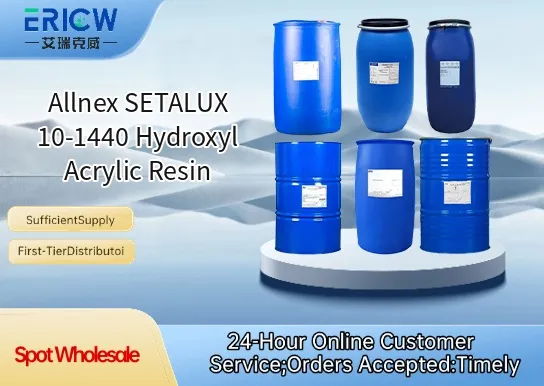
Q1: What is the primary function of SETALUX 10-1440 in coating formulations?
A: SETALUX 10-1440 serves as a hydroxyl-functional acrylic resin designed to act as a reactive binder in two-component polyurethane and polyester-based coating systems. It contributes to film formation, crosslink density, and final coating performance—including hardness, flexibility, and chemical resistance.
Q2: Is SETALUX 10-1440 compatible with common isocyanate crosslinkers?
A: Yes, it is formulated for compatibility with standard aliphatic and aromatic polyisocyanates, including HDI trimer and IPDI-based hardeners. Optimal cure performance is achieved when matched with isocyanates offering appropriate NCO:OH stoichiometry and reactivity profile.
Q3: How should SETALUX 10-1440 be stored to maintain stability?
A: Store in tightly sealed original containers in a cool, dry, and well-ventilated area, away from direct sunlight and sources of heat or ignition. Under these conditions, shelf life is typically 12 months from date of manufacture. Avoid prolonged exposure to moisture or freezing temperatures.
Q4: Can SETALUX 10-1440 be used in high-solids or low-VOC formulations?
A: Yes, its molecular design supports formulation into medium-to-high solids coatings. When combined with appropriate solvents and crosslinkers, it enables VOC-reduced systems without significant compromise to application properties or film integrity.
Q5: Does this resin require catalysts or additives for optimal curing?
A: While not strictly required, tin-based catalysts (e.g., dibutyltin dilaurate) may be used to accelerate the urethane reaction in specific applications. The need for and level of catalysis depends on cure schedule, film thickness, and desired pot life—formulators are advised to evaluate through small-scale trials.
Contact With Us:
E-mail: wangxingqiang@ericwchem.com
Have a Questions? Call Us:
Add:
Building A1, Jiete Industrial Park, Huangpu District, Guangzhou City, Guangdong Province, China