English
 Español
 tiếng việt
 русский
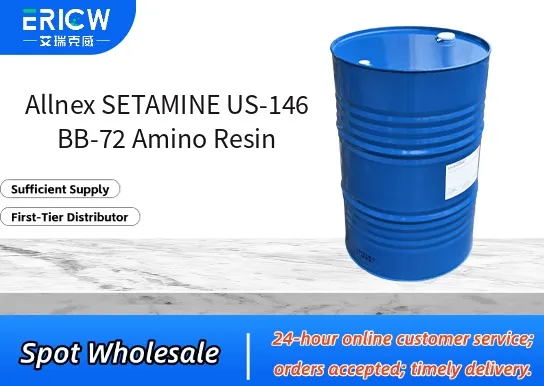
Highly reactive methylated melamine-formaldehyde resin with optimized methylol/methoxy group balance for efficient crosslinking.
Low free formaldehyde content, supporting compliance with stringent industrial health and safety standards.
Excellent compatibility with acrylic, polyester, and alkyd resins in solvent-borne coating systems.
Provides superior hardness, chemical resistance, and gloss retention in thermoset coatings.
Designed for fast cure at moderate baking temperatures (140–160 °C), enhancing production efficiency.
Automotive OEM and refinish topcoats requiring high durability and appearance performance.
Industrial maintenance coatings for metal substrates exposed to harsh environmental conditions.
Appliance coatings (e.g., refrigerators, washing machines) demanding excellent chip resistance and smooth finish.
General-purpose coil coatings where balanced reactivity and film integrity are critical.
Powder coating hybrid systems leveraging amino functionality for enhanced crosslink density.
| Chemical Type | Methylated melamine-formaldehyde resin |
| Product Form | Liquid |
| Appearance | Clear to pale yellow, homogeneous liquid |
| Non-Volatile Content (120 °C, 60 min) | 80.0 – 84.0 wt% |
| Viscosity (25 °C, Brookfield RV, spindle #3, 20 rpm) | 200 – 600 mPa·s |
| Acid Number | ≤ 5 mg KOH/g |
| Free Formaldehyde | ≤ 0.3 wt% |
| Primary Applications | Solvent-borne industrial and automotive coatings |
Q1: What is the primary function of SETAMINE US-146 BB-72 in coating formulations?
A: SETAMINE US-146 BB-72 is a low-viscosity, highly reactive amino resin designed primarily as a crosslinker for hydroxyl-functional resins—such as alkyds, acrylics, and polyesters—in thermosetting coil, can, and general metal coatings. It contributes to rapid cure response, excellent hardness development, and enhanced chemical resistance.
Q2: Is SETAMINE US-146 BB-72 compatible with acid-catalyzed systems?
A: Yes, it is commonly used with strong or weak organic acid catalysts (e.g., p-toluenesulfonic acid or blocked acids) to accelerate curing at typical metal coating bake temperatures (140–200 °C). Catalyst selection and dosage should be optimized based on desired pot life, flow, and cure profile.
Q3: How does US-146 BB-72 compare to conventional melamine-formaldehyde resins in terms of formaldehyde release?
A: As a butylated melamine-formaldehyde resin, US-146 BB-72 exhibits lower free formaldehyde content compared to non-butylated or partially modified analogues. Its formulation inherently supports reduced emissions during cure, aligning with industry trends toward lower-VOC and safer processing conditions.
Q4: Can this resin be used in food-contact metal packaging coatings?
A: SETAMINE US-146 BB-72 is formulated for industrial metal finishing applications and may be incorporated into food-contact coating systems when fully cured and validated within a complete formulation that meets applicable regulatory requirements. Final compliance depends on the entire system—including base resin, catalyst, additives, and processing conditions—and must be confirmed by the coating formulator through appropriate testing and regulatory review.
Contact With Us:
E-mail: wangxingqiang@ericwchem.com
Have a Questions? Call Us:
Add:
Building A1, Jiete Industrial Park, Huangpu District, Guangzhou City, Guangdong Province, China