English
 Español
 tiếng việt
 русский
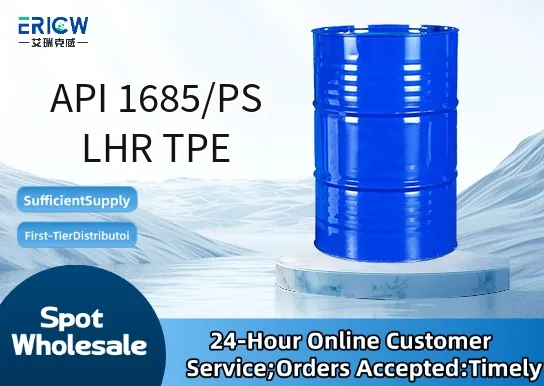
Low-hardness, high-resilience thermoplastic elastomer with excellent compression set resistance.
Good processability via injection molding and extrusion without requiring drying or pre-treatment.
Enhanced skin-friendly tactile feel and low extractables, suitable for consumer-facing components.
Compatible with polypropylene (PP) and polyethylene (PE) substrates for co-molding applications.
RoHS-compliant and free of phthalates, heavy metals, and halogenated flame retardants.
Soft-touch overmolding for power tool grips and handheld appliance housings.
Sealing gaskets and vibration-damping pads in automotive interior modules.
Flexible hinges and snap-fit components in medical device enclosures.
Ergonomic grips for sporting goods and personal care devices.
Non-slip surfaces for industrial control panels and safety-critical equipment interfaces.
| Chemical Type | Styrenic Block Copolymer (SBC)-based TPE |
| Product Form | Pellets |
| Appearance | Off-white to light beige, free-flowing granules |
| Hardness (Shore A) | 75 ± 3 |
| Density (g/cm³) | 0.98–1.02 |
| Melt Flow Rate (230°C/2.16 kg, g/10 min) | 12–18 |
| Primary Applications | Overmolding, soft-touch components, sealing elements |
| Key Features | Low hardness, high resilience, PP/PE adhesion, non-toxic formulation |
Q1: What is the primary functional role of API 1685/PS LHR TPE in polymer formulations?
A: API 1685/PS LHR TPE functions as a high-efficiency, low-haze processing aid and surface modifier for thermoplastic elastomers and styrenic systems, enhancing melt flow, reducing die buildup, and improving surface gloss and release characteristics without compromising mechanical integrity.
Q2: Is API 1685/PS LHR TPE compatible with common thermoplastic elastomer matrices such as TPE-S, TPE-V, and TPE-E?
A: Yes — it demonstrates broad compatibility across styrenic (TPE-S), vulcanized (TPE-V), and ester-based (TPE-E) elastomer systems. Compatibility is typically confirmed through standard melt blending trials and rheological evaluation under typical processing conditions.
Q3: How does API 1685/PS LHR TPE differ from conventional silicone-based or wax-type processing aids?
A: Unlike traditional waxes or silicones, API 1685/PS LHR TPE offers superior thermal stability during extrusion and injection molding, reduced volatility, and improved dispersion uniformity — resulting in more consistent surface effects and lower risk of bloom or plate-out at elevated processing temperatures.
Q4: What are the recommended handling and storage conditions to maintain product performance?
A: Store in original sealed containers at temperatures between 10 °C and 30 °C, away from direct sunlight and sources of heat or moisture. Avoid prolonged exposure to ambient humidity prior to use, as hygroscopic sensitivity may affect dispersion efficiency in sensitive formulations.
Contact With Us:
E-mail: wangxingqiang@ericwchem.com
Have a Questions? Call Us:
Add:
Building A1, Jiete Industrial Park, Huangpu District, Guangzhou City, Guangdong Province, China