English
 Español
 tiếng việt
 русский
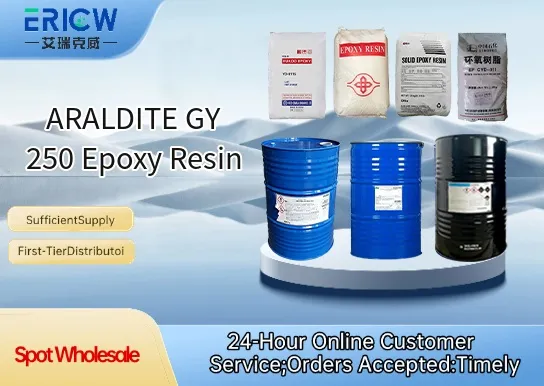
High-purity, low-viscosity liquid epoxy resin based on diglycidyl ether of bisphenol-A (DGEBA).
Excellent compatibility with a wide range of amine and anhydride curing agents for tailored cure profiles.
Superior electrical insulation properties and high dielectric strength suitable for electronic encapsulation.
Good adhesion to metals, composites, and cured thermosets without mandatory surface priming.
Low volatile organic compound (VOC) content and absence of reactive diluents—supports sustainable processing.
Electrical insulation and potting compounds for transformers, reactors, and busbar systems.
High-voltage composite insulators and bushings in power transmission infrastructure.
Structural adhesive formulations for wind turbine blade bonding and repair.
Matrix resin in filament-wound pressure vessels and aerospace secondary structures.
Encapsulation of sensors, PCBs, and high-reliability electronic modules.
| Chemical Type | Diglycidyl ether of bisphenol-A (DGEBA) |
| Product Form | Clear, low-viscosity liquid |
| Appearance | Colorless to pale yellow, transparent |
| Epoxy Equivalent Weight (EEW) | 185–192 g/eq |
| Viscosity at 25°C | 12–16 Pa·s (12,000–16,000 cP) |
| Chloride Content | ≤ 500 ppm |
| Volatiles Content | ≤ 0.3 wt% |
| Primary Applications | Electrical insulation, structural composites, high-performance adhesives |
Q1: What is the primary function of ARALDITE GY 250 in epoxy formulations?
A: ARALDITE GY 250 is a liquid bisphenol-A based epoxy resin designed as a reactive diluent and viscosity modifier. It reduces formulation viscosity without significantly compromising crosslink density or final mechanical performance, enabling improved processability in casting, impregnation, and coating applications.
Q2: Is ARALDITE GY 250 suitable for high-temperature curing systems?
A: Yes — it is fully compatible with common amine, anhydride, and catalytic hardeners used in elevated-temperature cure cycles. Its reactivity supports robust network formation at typical post-cure temperatures, contributing to enhanced thermal stability and glass transition temperature (Tg) in the final cured system.
Q3: How does ARALDITE GY 250 compare to conventional reactive diluents in terms of compatibility and shrinkage?
A: Unlike many monofunctional diluents, ARALDITE GY 250 retains difunctionality, which helps maintain crosslink integrity and minimizes post-cure shrinkage. It exhibits excellent miscibility with standard epoxy resins and hardeners, reducing phase separation risks during storage or processing.
Q4: Can ARALDITE GY 250 be used in electrical insulation applications?
A: Yes — its low ionic impurity profile and ability to yield electrically stable, low-dissipation cured networks make it well-suited for encapsulation, potting, and insulating varnishes in medium-voltage electrical components, provided appropriate hardeners and processing conditions are selected.
Contact With Us:
E-mail: wangxingqiang@ericwchem.com
Have a Questions? Call Us:
Add:
Building A1, Jiete Industrial Park, Huangpu District, Guangzhou City, Guangdong Province, China