English
 Español
 tiếng việt
 русский
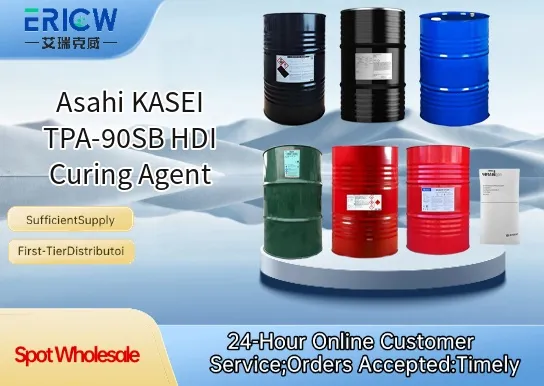
High reactivity with hydroxyl-functional resins, enabling rapid room-temperature or low-bake curing.
Excellent yellowing resistance and long-term UV stability for durable clear and pigmented coatings.
Low viscosity and high solubility in common organic solvents, facilitating easy formulation and homogeneous mixing.
Superior chemical resistance and hardness development in polyurethane and hybrid coating systems.
Non-blocking, low-volatility aliphatic HDI-based trimer structure compliant with VOC-reduction requirements.
Automotive OEM clearcoats and repair topcoats requiring high gloss and weatherability.
Industrial maintenance coatings for metal substrates in architectural and transportation sectors.
Wood finishing systems demanding scratch resistance and clarity retention.
Plastic coatings for automotive interior trim and consumer electronics housings.
High-performance can coatings for food and beverage packaging applications.
| Chemical Type | Aliphatic HDI-based isocyanurate trimer |
| Product Form | Liquid |
| Appearance | Colorless to pale yellow transparent liquid |
| NCO Content (wt%) | 17.5–18.5% |
| Viscosity (25°C, mPa·s) | 800–1,200 |
| Density (25°C, g/cm³) | 1.18–1.22 |
| Flash Point (°C, closed cup) | 145–155 |
| Storage Stability | Stable for ≥12 months at 25°C in sealed containers |
Q1: What is the primary function of TPA-90SB in coating and adhesive formulations?
A: TPA-90SB is a low-viscosity, aliphatic HDI-based polyisocyanate curing agent designed to react with hydroxyl-functional resins (e.g., polyesters, acrylics, or polyethers) to form durable, weather-resistant polyurethane networks. It enables ambient- or low-bake cure profiles while supporting excellent gloss retention and mechanical performance.
Q2: How does TPA-90SB differ from standard HDI biuret or isocyanurate curing agents?
A: TPA-90SB features a proprietary molecular architecture that balances reactivity, viscosity, and steric stability. Compared to conventional HDI trimers, it offers improved compatibility with polar resins, reduced tendency for crystallization, and enhanced pot life—especially in solventborne and high-solids systems—without sacrificing final film hardness or chemical resistance.
Q3: Is TPA-90SB suitable for waterborne polyurethane systems?
A: Yes—TPA-90SB is compatible with many waterborne polyurethane dispersions (PUDs) and hybrid systems when properly dispersed or pre-emulsified. Its low volatility and controlled NCO reactivity help minimize CO₂ evolution and blistering during film formation, making it well-suited for high-performance architectural and industrial waterborne coatings.
Q4: What are typical handling and storage recommendations?
A: Store in tightly sealed containers under dry, cool conditions (below 30°C), away from moisture, strong bases, and reducing agents. Prolonged exposure to humidity may cause surface haze or gelation due to urea formation. Always use dry handling equipment and follow standard industrial hygiene practices for isocyanates.
Q5: How should TPA-90SB be dosed relative to the resin component?
A: Dosage depends on formulation requirements—including target crosslink density, cure schedule, and desired film properties—but generally ranges from 0.1% to 2% by weight relative to total solids, based on NCO:OH stoichiometry. Optimization requires empirical testing using FTIR or gel time analysis to ensure full cure without unreacted isocyanate residues.
Contact With Us:
E-mail: wangxingqiang@ericwchem.com
Have a Questions? Call Us:
Add:
Building A1, Jiete Industrial Park, Huangpu District, Guangzhou City, Guangdong Province, China