English
 Español
 tiếng việt
 русский
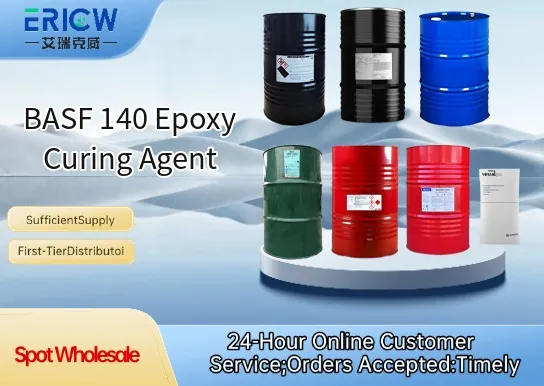
Fast-reacting aliphatic amine-based curing agent for room-temperature and elevated-temperature epoxy systems.
Delivers excellent mechanical strength, chemical resistance, and adhesion to diverse substrates including metals and concrete.
Low viscosity enables easy handling, precise metering, and uniform mixing with standard epoxy resins.
Low odor and reduced volatility compared to conventional aliphatic amines—supports improved workplace safety and lower VOC emissions.
Compatible with bisphenol-A and bisphenol-F epoxy resins, offering formulation flexibility for industrial coatings and adhesives.
Industrial floor coatings for warehouses, manufacturing facilities, and cleanrooms.
High-performance structural adhesives for automotive and aerospace assembly.
Repair mortars and grouts for concrete infrastructure rehabilitation.
Electrical encapsulation and potting compounds requiring thermal stability and dielectric integrity.
Marine and offshore protective coatings resistant to saltwater and UV exposure.
| Chemical Type | Aliphatic polyamine adduct |
| Product Form | Liquid |
| Appearance | Pale yellow to amber transparent liquid |
| Density (20 °C) | ~0.92–0.95 g/cm³ |
| Viscosity (25 °C) | 200–400 mPa·s |
| Amine Value | 380–420 mg KOH/g |
| Reactivity Profile | Medium-to-fast cure at ambient temperature; accelerated cure above 40 °C |
| Primary Applications | Coatings, adhesives, sealants, and composite matrices |
Q1: What is the primary chemical class of BASF 140?
A: BASF 140 is an amine-based epoxy curing agent, specifically formulated as a low-viscosity aliphatic polyamine adduct designed for ambient- and elevated-temperature cure systems.
Q2: How does BASF 140 affect pot life and cure speed compared to conventional amines?
A: Due to its modified amine structure, BASF 140 offers extended pot life relative to highly reactive primary amines while maintaining good reactivity at room temperature. Gel time and full cure kinetics are formulation-dependent but generally support practical processing windows for coatings, adhesives, and composite applications.
Q3: Is BASF 140 suitable for high-performance protective coatings?
A: Yes — it is widely used in high-solids and solvent-free epoxy coating systems where excellent chemical resistance, adhesion to damp or marginally prepared substrates, and low surface sensitivity are required, such as in industrial maintenance and marine environments.
Q4: What is the typical dosage range for BASF 140 in standard epoxy formulations?
A: Dosage depends on the epoxy resin type, desired performance profile, and processing conditions; it is typically used at low concentrations, generally ranging from 0.1% to 2% by weight relative to the resin, with optimization recommended via small-scale trials.
Q5: Can BASF 140 be used in food-contact or potable water applications?
A: BASF 140 is not pre-qualified for direct food-contact or potable water applications under major global regulatory frameworks; end-use compliance must be validated by the formulator based on final cured system testing and applicable local regulations.
Contact With Us:
E-mail: wangxingqiang@ericwchem.com
Have a Questions? Call Us:
Add:
Building A1, Jiete Industrial Park, Huangpu District, Guangzhou City, Guangdong Province, China