English
 Español
 tiếng việt
 русский
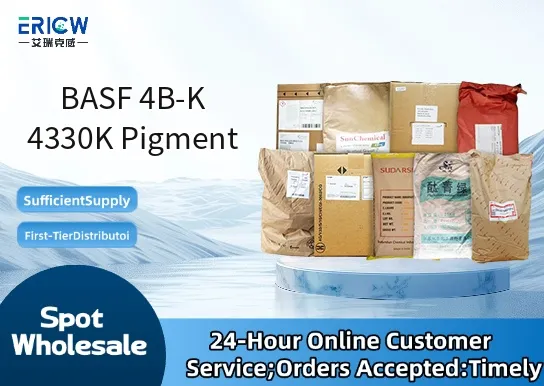
High chroma and excellent color strength in demanding coating systems.
Outstanding thermal stability up to 280 °C, suitable for high-temperature processing.
Good dispersibility in both polar and non-polar resin systems, including polyesters and acrylics.
Excellent lightfastness (ISO 105-B02: Grade 7–8) and weather resistance in exterior applications.
Low volatile organic compound (VOC) contribution and compliant with major global regulatory frameworks.
Automotive OEM and refinish coatings.
Industrial coil coatings for architectural and appliance substrates.
High-performance plastic coloration, especially for engineering thermoplastics.
Powder coatings requiring consistent hue and batch-to-batch reproducibility.
Specialty inks for packaging and decorative laminates.
| Chemical Type | Organic Pigment (Benzimidazolone derivative) |
| Product Form | Fine powder, free-flowing granules |
| Appearance | Reddish-yellow crystalline solid |
| Primary Applications | Coatings, plastics, inks |
| Key Features | High tinctorial strength, excellent heat stability, good migration resistance |
| Benefits | Reduced dosage requirements, extended service life under UV exposure, compatibility with standard dispersion equipment |
| Regulatory Compliance | REACH registered; compliant with FDA 21 CFR §178.3297 (for indirect food contact) |
| Storage Conditions | Store in cool, dry place below 30 °C; protect from moisture and direct sunlight |
Q1: What is the primary application area for BASF 4B-K 4330K Pigment?
A: BASF 4B-K 4330K is a high-performance organic pigment dispersion designed primarily for use in water-based industrial coatings, including architectural paints, wood finishes, and general-purpose protective coatings where excellent color strength, lightfastness, and colloidal stability are required.
Q2: Is BASF 4B-K 4330K compatible with both anionic and non-ionic surfactant systems?
A: Yes — this pigment dispersion is formulated to deliver robust compatibility across a broad range of waterborne resin systems and is stable in formulations containing common anionic, non-ionic, or hybrid surfactant packages, though final compatibility should be verified under actual production conditions.
Q3: How should BASF 4B-K 4330K Pigment be incorporated into a coating formulation?
A: It is recommended to add the pigment dispersion during the let-down stage, after the base resin and co-solvents have been homogenized. Gentle mixing at moderate shear is sufficient to ensure uniform distribution without compromising dispersion integrity.
Q4: Does BASF 4B-K 4330K require post-addition stabilization or rheology adjustment?
A: The product is supplied as a pre-stabilized aqueous dispersion and typically does not require additional stabilizers. However, final formulation viscosity and flow behavior may necessitate rheology modifiers — selection should be based on compatibility testing with the full system.
Contact With Us:
E-mail: wangxingqiang@ericwchem.com
Have a Questions? Call Us:
Add:
Building A1, Jiete Industrial Park, Huangpu District, Guangzhou City, Guangdong Province, China